Rokowhiria

Stories

The team at Rokowhiria produce research and writing for many outlets, including exhibitions, articles, collections, and more. Discover essays, research, and weekly heritage articles, or stay up to date with our latest news.

The Fearless Ferryman

Cropped part of a triptych illustration by the Lands and Survey Department showing a man and horse being ferried across a river by punt.

At the seventeenth annual gathering of the Ashburton Caledonian Society in December 1895, William de Blacquiere Compton was presented with a medal and a purse of sovereigns from the inhabitants of the Ashburton Borough and County, in recognition of his gallant life-saving services. This was followed two years later by a letter of acknowledgment from the Colonial Secretary and a grant of £5 for services rendered to the local community. It is difficult today to comprehend just how many travellers’ lives were at risk in the days before bridges were built across our rivers. When snow melt from the mountains transformed our seemingly innocuous braided rivers into torrents of flood, the only option for travellers was to find shelter at a nearby accommodation house until the danger subsided. It was here that the services of men like Compton were invaluable. Ferrymen had a knack for finding the safest place to ford a swollen river, they owned reliable horses, and had possession of a punt which could convey passengers and goods safely while livestock swam alongside. They were also known to, on occasion, carry passengers themselves. As early as 1863, Compton held the position of ferryman on the banks of the Rakaia River; in this role, the Christchurch Star newspaper attested to his “coolness and courage in danger and devotion in encountering it for the benefit of others”, qualities that earned him the notoriety which resulted in his awards thirty years later. Daring rescues He had no hesitation in entering the raging waters to rescue bodies from the river, often travelling overnight in search of those in peril, and he would spend hours reviving those he had managed to rescue in time. There were occasions when he was known to have travelled for over 15 hours on horseback to retrieve a body, regardless of the weather. In 1875, a man called Benjamin Packwood was crossing the Rangitata River with a six-horse team, aboard a timber truck, when they were washed downstream, resulting in the drowning of one horse. Compton swam in to bring Packwood out, then returned to raise the leading horse to its feet, holding the others until help arrived. When a Mr. Fred Duncan was snowed in at the head of the Rakaia, word reached Compton that the trapped man was short on supplies. He and a companion rode for three days, finding Duncan in a “deplorable condition”, sheltering in a hut. Luckily, they all returned to Methven alive, albeit through very heavy rain and thunderstorms. Compton left the district in 1903, after rendering various services to the people of the Ashburton County, which included having worked as a pound keeper, “Ranger and Inspector of Nuisances”, a Volunteer Fire Brigade veteran, and of course a ferryman. Interestingly, it was reported that he had been the first child christened in Lyttelton, as a six-year-old, on 6 January 1851 by Bishop Selwyn. Ironically, and sadly, his life ended as he had lived; Compton drowned when the Ohutu Bridge collapsed near Wellington in 1923.

Continue Reading

A Treasured Little Trophy

Ashburton Old Boys' Rugby Team, group photo of an Edwardian-era rugby team (1918), three rows, men in uniforms.

The Ashburton County Rugby Union’s annual seven-a-side tournament, held at the Ashburton Domain on Thursday, 19 August 1920, was witnessed by a record crowd who also enjoyed the favourable weather on offer. The Ashburton Guardian had reported high hopes for the standard of play at the tournament, with eight senior teams and twelve junior combination teams planned to compete on the day. Aggressive play was expected, with defence turning into attack with lightning rapidity at the first opportunity. Machine-like, rearguard tactics were essential for success. Less than stellar play The tournament itself proved a disappointment for the Guardian reporter present, who was a tad disparaged at the standard of football played, contending that the style simply aped “club” football, rather than using the tactics often played in successful seven-a-side matches. The reporter was critical of several aspects of play, including diagonal sprinting across the field, and the teams allegedly putting too much faith in their forwards to the detriment of the backs, who did not have many opportunities to utilise the ball. Erratic and ill-timed transfers were considered the seat of the trouble as “time and again tries were thrown away owing to faulty handling at a critical moment.” The ‘Old Boys Senior Team’ were the champions of the first division, defeating the rival ‘Ashburton A’ team 1-0. The winning team members were each presented with a miniature trophy, an example of which is pictured above. The individually named golden rugby balls couldbe used as a match striker, with a convenient attachment allowing them to be clipped/hung to one’s watch chain. The smoke meeting The mini trophies were likely presented to players at a “Smoke Meeting” which took place at the Orange Hall the following year in 1921. The special reunion involved entertainment, a celebration of the year’s events, and the opportunity for guests to smoke. To our modern sensibilities, the idea of encouraging smoking at any event, and offering a gadget to enable ease of access to the habit seems irresponsible? However, between 1920 and 1962, tobacco consumption peaked in Aotearoa New Zealand. Along with the expansion of the tobacco industry, smoking was considered a healthy habit which became increasingly popular and was deemed an integral part of 20th century life. Even with this in mind, the members of the Old Boys Rugby Team were unlikely to wear their match strikers. Following the First World War, wrist watches had replaced the iconic pocket watch, due to their practicality and ease of use. Therefore, it is far more likely that the unique trophy became a treasured memento for each player who conquered the ‘Ashburton A’ team in that decisive, but unimpressive match in August 1920. Unless otherwise stated, photographs and research materials on this page are owned by the Ashburton Museum & Historical Society Inc. This post was modified for this blog and was originally published in the Ashburton Guardian, 27 March 2026.

Continue Reading

George Smith: The Horticultural Hotshot

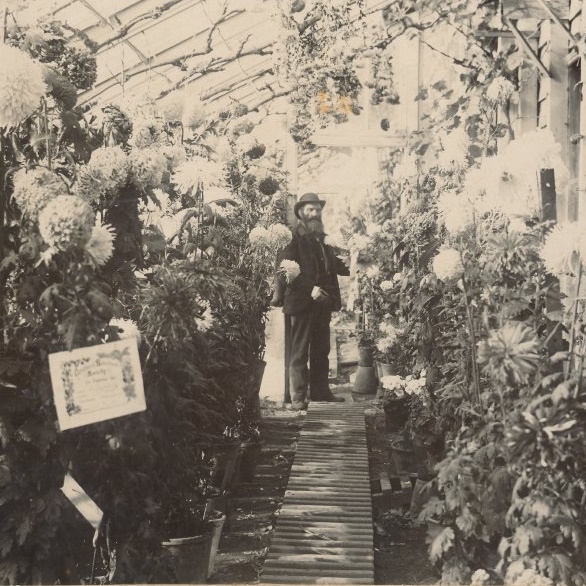
George Smith, an Ashburton horticulturalist, standing in his hothouse surrounded by plants.

In the early years of farming in Mid Canterbury, when European settlers were busy preparing the land for cultivation, growing fruit was not high on their list of priorities. Fruit had to be imported, and even early potatoes came from Ōtautahi Christchurch. That was until the arrival of people like George T. Smith, who established the Smithfield Nursery and was well known for his prolific apple production, not to mention his dahlias and other sumptuous fruits and blooms. George hailed from Rothiemay, in Banffshire. Born in 1831, he was one in a family of nine. Educated at the Fordyce Academy, he became an apprentice gardener and gained extensive experience in gardens throughout the United Kingdom. He developed significant expertise in propagation and orchard house culture, eventually serving as head gardener at Ainsely Hall in Cambridge. In 1864, he decided to emigrate, and embarked on the vessel ‘British Empire’ bound for Lyttelton. Initially working at his trade, he soon caught the ‘gold fever’ and went prospecting at Jackson's Bay. After nearly seven years of gold hunting, with fair success, including a stint at Gympie, in Queensland, he reverted to his former career, eventually purchasing fourteen acres of land on what is now Smithfield Road, Ashburton. Bountiful blooms and exquisite fruit George transformed what was originally deemed a wilderness into a thriving garden and orchard, where visitors flocked to enjoy the exuberant blooms, and to purchase young plants for development, along with apples, gooseberries, and other delights. In an interview with George, published by the Ashburton Guardian in 1890, the reporter described his “sample room”, in which he displayed an opulent array of 146 varieties of apples. There was also a grape house, full of the Black Hamburg variety, and George also showed off his cider and wine operation; over the last year, his beverage production including 100 gallons (nearly 380 litres) of gooseberry wine. Naturally, George Smith was a well-known and successful competitor in horticultural shows. His gooseberries were judged the heaviest in a hotly contested competition in 1882, weighing in at a whole ounce heavier than other competitors’ entries. Not surprisingly, his trees were purchased by many a budding gardener in the area. His giant strawberries may not have been particularly handsome to look at, being of “the knobby sort”, but they were enormous and much appreciated by Ashburtonians. George sold his nursery to Mr. Tom Pitt in 1898.He died in 1924, at the age of 92, leaving significant bequests to philanthropic organizations, as well as the legacy of a significant number of fruit trees and plants, which would be enjoyed by Ashburtonians for generations to come. Unless otherwise stated, photographs and research materials on this page are owned by the Ashburton Museum & Historical Society Inc. This post was modified for this blog and was originally published in the Ashburton Guardian, 20 March 2026.

Continue Reading

From Swaddling to Splendour

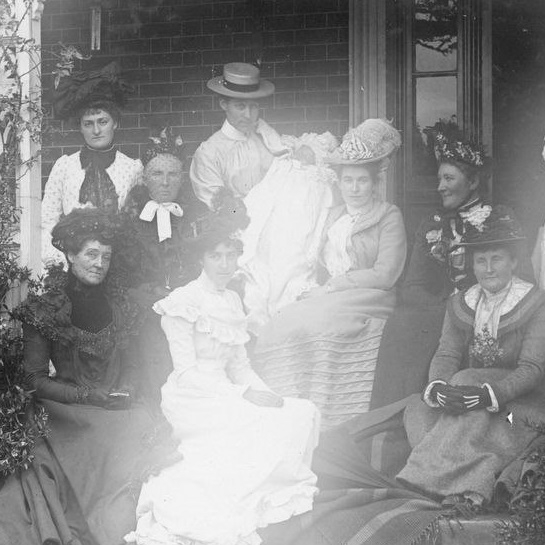
A Victorian/Edwardian family with a baby following their christening.

Christening gowns became popular in Europe during the 18th century. Prior to this, infants would be wrapped in a swaddling cloth, which were long strips of fabric, preventing the infant from moving. At the moment of baptism, the child was removed from the swaddle and fully immersed in holy water. Unlike swaddling cloths, christening gowns were designed to be kept on during the ceremony, with only the child’s head being dunked. The more intricate the gown, the better off the family. Status symbol At least one Ashburton baby was adorned with the sumptuous cape now safely ensconced in the Museum’s collection (pictured below). Intended to keep the precious baby toasty warm, the wool and quilted cotton garment is also decorated with tassels at the back. While to most of us this is a very nice cape, to those 'in the know' it is an English made garment, belonging to a family of wealth or position which screams “this baby is somebody!” At the time this cape would have been worn, christening dates were usually set as soon as the mother had sufficiently recovered from birth, and was able to go out. The child would usually be about a month to six weeks old at that point. In most cases, a christening would have been a family affair. Normally, only close relatives of the parents would have been invited, as we see in the photo above, included in our collection. Here we see a gentleman, presumably the proud father, holding his child at an angle which best displays the voluminous christening attire. The young mother has her own chair, flanked by two mature ladies, possibly doting grandmothers. It is important to remember that while a christening is a religious ceremony, it was also an opportunity for parents to show off their new arrival, and for relations, friends and acquaintances to admire him or her. The grandeur of the guests’ attire compliments that of the baby, and one can only imagine the amount of starching and ironing necessary to ensure their ensembles were in pristine condition for this most auspicious day. Taking into consideration the very real likelihood of infant or mother mortality at the time, such an occasion was also one of relief for a healthy and safe conclusion to a period of life that could sadly result in heartbreaking events. Christening gowns were often carefully preserved and used for multiple generations of the same family, coming to symbolise continuity and connection, rather than economic prosperity. Unless otherwise stated, photographs and research materials on this page are owned by the Ashburton Museum & Historical Society Inc. This post was modified for this blog and was originally published in the Ashburton Guardian, 13 March 2026.

Continue Reading

The 'Rural Wife Crisis'

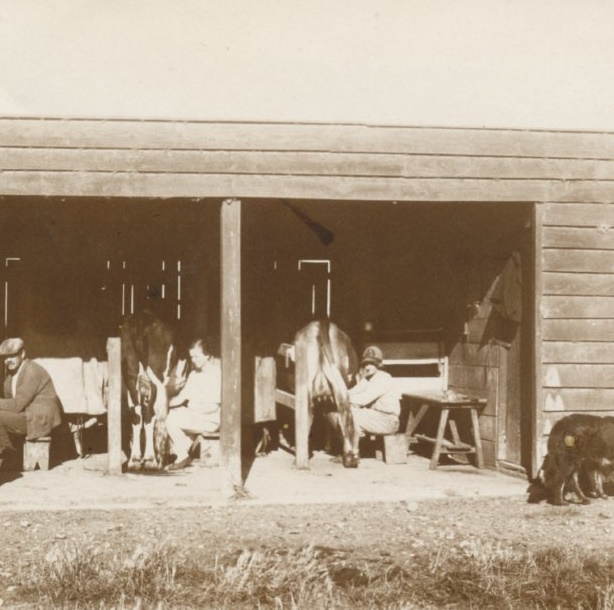
Cows owned by Walter Lylian being milked by hand, Staveley, 1915. AM&HS Collection (Photo reference: 04.2003.0108f)

While the notion of gender pay equity was largely non-existent in 1911, there was considerable debate regarding the plight of rural wives, and the scarcity of female domestic staff. The situation was so dire that newspaper headlines carrying the title “Killing Off Farmers’ Wives” were a relatively common occurrence. The phrase was first coined by a Mr. McQueen, a Southland delegate at the Farmers Union conference that year. During the debate, another delegate claimed that "if men worked half as hard as the women had to work, they would be killed.” Dying young The mention of the topic at the Farmers Union conference led to newspapers around the country raising the issue. It was noted that a significant number of wives were dying young, necessitating their farmer husband to remarry in order for his family to be cared for. The contention that perhaps wives of the 20th century were not as ‘hale and hearty’ as their predecessors did not mitigate the fact that the current generation appeared to be being worked to death. In a Guardian column from September 1911, entitled ‘Killing Settlers’ Wives’, a male Ashburtonian suggested that the root of the problem lay with the disparity between the attractive working conditions in shops and factories, and those experienced by domestic staff. He contended that the only way to attract girls to domestic work was to offer more appreciation, improved wages, and greater freedom to workers, thus placing them “on a level, industrially and socially, with their sisters engaged in shop and factory life.” While the males involved tended to focus on the solution of increasing the amount of female domestic staff prepared to work alongside their wives to mitigate their workload, some of the wives in question had another solution. Why couldn’t they receive wages? One wife, writing to the Guardian in October 1911, described her daily workload: “Three children and an eight-roomed house to look after, cooking to do, and also milk buckets to wash twice a day. The garden required weeding, and water was carried the two chain distance (40 metres) from the house to the creek. There is the mending, washing and ironing all to be done by myself. What sensible man would say I ought not to get wages?” It can be assumed that her spouse did not model such sensibility, as she goes on to say: “Of course, most women know they can order clothes according to their position in life. But there is not a lot of pleasure in ordering good quality clothes when you get grumbled at for days, and receive black looks!” She suggested that every woman carrying a similar workload to herself should, by law, receive 10 shillings a week for every three pounds their husband earned. Then, she contended, work would be a pleasure, providing women like her with the freedom to drive into the township or visit neighbours without the need to rely on her husband to begrudgingly take her. Her attitude regarding her current situation was summed up as follows: “Life on a dairy farm is all work, work, with very little pleasure.” Unless otherwise stated, photographs and research materials on this page are owned by the Ashburton Museum & Historical Society Inc. This post was modified for this blog and was originally published in the Ashburton Guardian, 6 March 2026.

Continue Reading

Say Yes to the Dress: 100 Years of Mid-Canterbury Weddings

A shot of wedding dresses on display during Dearly Beloved: 100 Years of the Wedding Dress

Among the many artefacts collected and protected by museums, we find love in all forms, from letters and poems between loved ones sent during war, to gifts, dairies, and valentine cards. Love can also be found in a certain kind of garment: the wedding dress. By being worn during a wedding, a piece of clothing is transformed into a unique statement of love, devotion, and commitment. Weddings are a way to capture love and celebrate the moment with friends and family and are often described as the most important day for both the bride and groom. The wedding dress becomes a memento of a bride’s special day, leaving happy memories stained onto the fabric forever. Popularised by Queen Victoria in 1840, wearing a white wedding dress became a lasting trend in the Western world. Different styles have surfaced over the years, from formal gowns and corsets to more diverse silhouettes seen in modern times. A selection of dresses, which were worn at various times from 1882 to 1992, were picked out and put on display for Dearly Beloved: 100 Years of the Wedding Dress, which ran from 14 December 2025 to 8 March 2026. The display allowed each dress to convey its own unique story, also shedding light on the story of each bride’s special day. Dark and demure The oldest gown that graced the display was a wedding dress worn by 22-year-old Catherine Julia Cullen from Akaroa, who married Hugh Cullen in the newly rebuilt Church of the Holy Name of Jesus in Whakatere Ashburton, on 11 December 1882. At the time, coloured dresses were on trend when getting married, as one tended to wear their best attire on their wedding day. A special accessory was usually worn, such as a veil, floral headpiece, or bouquet. Catherine wore a silk blue-grey gown, with cloth-covered buttons, and an asymmetrical princess line skirt, with a high neck and bustle effect at the back, plus a separate train with a pleated edge. A modest choice The second dress in the display was worn by Emilie Bertha Diehl, daughter of hotel owners Ernst and Ellen Diehl. Emilie was to marry Arthur Wilson, son of F. Wilson of Tunbridge Wells, on 6 November 1912. They married at Herbert but ended up staying in Ashburton, where they were eventually buried. Wedding gowns from this period commonly had high necklines and long sleeves with lace and silk detailing alongside delicate embroidery. Wedding dresses during this time were usually cream or ivory toned, as bleaching the fabric white caused too much damage to the structure of the thread. Emilie’s dress was made from the same type of cloth used for nuns’ veils; the lace insert was designed for modesty. Her dress was of cream coloured fabric with full-length long sleeves. Cloth-covered buttons, floral lace insert and a high collar are present, and lace was used in the lower section of the sleeves. There is satin furbelow trim along the V-shaped bodice, and knotted fringed decoration at the back. A roaring twenties wedding This wedding dress was worn by a schoolteacher, Edna Margaret Percy, daughter of Mr. H. C. Percy, a tobacconist based in Ashburton. Edna married Staff Sergeant John McGregor (Jack) McRae, a veteran of the First World War, also an accountant employed by Walter Pickles & Co., Ashburton. The pair married at St. Stephen’s Anglican Church, Ashburton on 14 April 1926. During the 1920s, fashion was influenced by the post-war “roaring twenties”. New movements in music and fashion emerged, reflecting glamour and freedom. As a result, two new bridal styles emerged. An informal style embraced shorter hemlines, while more formal designs included narrow, floor-length dresses with narrow trains, scrapping the corset and earlier dress forms. Brides during this era favoured drop-waist gowns with loose silhouettes, sophisticated beadwork and lace details. Edna’s wedding dress was a silk georgette, with a silk-lined drop waist and long sleeves. The front and back have fine glass beadwork peony designs and beaded tassels. Fabric godets adorn below the hip line on both the front and back, with a sewn in petticoat. Pretty in pink Another schoolteacher by the name of Eliza Knox, daughter of Irish settler Samuel Knox, married William (Bill) Giddings, an Ealing farmer. The couple were raised in Mid Canterbury and were married in July 1931. Eliza was seen as an older bride, marrying at age 41, which might be a reason that she rejected the traditional white gown. During this time the Great Depression was still in full swing, causing people to wear their best Sunday outfit rather than a traditional wedding gown. Pale colours like pink and blue were quite popular as well. 1920s styles still had influence during the 1930s, including close-fitting cloche hats, art deco detailing, and straight tailoring. Eliza’s wedding dress is a blush pink, velvet lined, ankle length dress with long sleeves. It has a combination of accessories including a pink felt velveteen ribbon cloche hat, silk stockings and matching shoes. A glamorous golden gown This elegant satin dress was worn by Honor Mary Dilon Sawle when she married William Kenneth George (Ken) Lill at Baring Square Methodist Church, Ashburton on 3 May 1939. Their marriage was much celebrated by Ashburton’s Methodist community, and before they were married, they received gifts from the church choir and combined bible classes. The couple were farmers at Loburn but soon moved to Christchurch. The dress reflects 1930s Hollywood glamour. The long, languid lines of the satin gown and holden hue were chosen to complement Honor’s chestnut hair. It was styled after Duchess of Windsor Wallis Simpson’s well-known 1937 wedding dress. Similarities can be seen especially around the fitted waist, high neckline and full-length skirt. Honor’s satin buttercream dress has long, full-length sleeves, a wide-fitting satin waistband insert, and an inserted train at the back with furbelowed hem. The gown also features a Peter Pan collar with fagoting work, also on bodice insert. It was originally worn with a Honiton lace veil. A pretty parachute One of two personal favourites of mine, this beautiful 1946 silk wedding dress was made by Nola Claire Miles (known as Claire) and her mother Ellen. The fabric used was taken from a Second World War parachute, demonstrating resourcefulness when the two women didn’t have enough ration coupons to by actual silk. The design of the dress reflects fabric rationing during 1940s. The number of pleats, seams and buttonholes were regulated, as was the width of sleeves, hems and collars. Brides either wore repurposed dresses or made their own with these restrictions in mind. Claire served in the Women’s Auxiliary Air Force; her husband Robert Neil McLeod was a flight rigger in the Royal New Zealand Air Force. The two met on a double date after they both served and were engaged eight days later. The dress is made of undyed parachute silk, is of full length with a long train, capped sleeves, and furbelowed ribbon along the hem of the dress, neckline and sleeves. The dress also has a sewn-in sash made from the same parachute silk, secured at the back. Medieval majesty This medieval-style gown was created for Marjorie Murdoch, for her marriage to Brewer Scott in 1959. The maker was Vera Hepburn, a Czechoslovakian woman whose own story of romance is worth exploring. She met her husband Alan, who was from Methven, during the Second World War. Alan was in a prisoner-of-war camp, and following the war, he and Vera settled in Methven. The making of the dress was influenced by Christian Dior’s ‘New Look’. Wedding gowns from the 1950s often featured cinched waists, tea-length skirts and luxurious fabrics such as satin, lace and tulle. The “hourglass” shape is a timeless and romantic silhouette that remains in iconic vintage bridal fashion today. Created by Vera Hepburn, the dress was made from cream, jacquard figured satin damask, and is full-length with a train, and long sleeves. Notable details include piping around the V-shaped neckline and waist, and the pearl embellishment and beadwork on the bodice and skirt. As seen in a magazine This delicate daisy-braid bridal gown, which was worn by bride Helen Popplewell, was inspired by magazine fashion, a possible reference to the work of New Zealand designer Vinka Lucas. Helen brought her design inspiration to a local dressmaker, who then created this exemplar 1960s two-piece gown. Helen was a nurse at the Ashburton Hospital, and her husband-to-be, Michael Hanrahan, later the director of Ashburton Museum. They married at Our Lady Help of Christians Church, Culverden, on 17 May 1969. Shown by this dress, A-line or empire-line dresses and simple silhouettes were staples of this era. The material was bought at MacLeod Fabrics in Christchurch, the cream colour chosen to match the “something borrowed” wedding veil, which had belonged to Michael’s mother. The dress and headdress both feature daisy motifs, an iconic symbol of decade’s shift towards modern and youthful style. The wedding dress was created by an unknown maker in Ashburton. The cream and two-piece outfit has a scoop-neck coat with train, is edged with daisy braids, and has long sleeves. Split wide and falling wide, closed at the neck. Worn over crimplene A-line dress, full-length, sleeveless. Daisy braid edging armholes, neckline and hem. Lovingly handmade This dress was worn by Andrea Mary Hasley Hallson (formerly Allen), winner of the 1970 Ashburton Bride of the Year competition. Andrea worked as a legal secretary, and she met her British husband while on holiday in London. The two married at St Andrew’s Presbyterian Church on 17 January 1970. At the time, the Ashburton Guardian described the dress as: “A gown of crepe with a coat of ribbon lace featuring bell sleeves, a hood and no veil.” The dress was judged to be the best out of 34 brides, who paraded with attendant bridesmaids before a capacity audience in the Returned Servicemen’s Association Hall, on 22 - 23 September 1970. Demand for seats led to a repeat event on the second night. The competition was judged by Christchurch photographer Euan Sargison, Paula Ryan, the 1969 ‘Rose of Tralee’ winner, and graphic designer and model Marlene Reay. Margret Ross placed second and Anrea Hunter third. In the Dearly Beloved exhibition, Andrea’s husband’s navy suit and pants was also displayed alongside her dress. A crocheted gem This crocheted wedding gown was made for Dorothy, a typist, when she married Raymond Jack Tanner from Timaru, at St. Anne’s Church, Geraldine, in 1972. Dorothy’s dress was entirely handmade by Valeire Guilford from Mayfield. During the 1970s, crochet was a major trend. This decade was free spirited and eclectic in style, which reflected new opportunities and social changes, especially for women as individual self-expression became more encouraged. This original white lining was replaced with blue, so it could be used for Scottish country dancing. The crochet dress was made from white yarn, is full length with three-quarter length sleeves. Bodice with gathered skirt at the waistline. Crew neck with buttons at the back, and blue fabric lining. An unknown beauty We only have a small amount of information about this dress, other than that it came from South Canterbury. Regardless, it is a good example of 1980s bridal fashion, capturing the decade’s extravagant flair and dramatic style. This dress captures aspects of the fairytale dream a Royal wedding, particularly that of Lady Diana Spencer, as she became Princess Diana, in 1981. The dress embodies the Victorian revival style, featuring puffed sleeves and layers upon layers of frills and lace applique, pearl and sequin detailing – all tied up in a giant bow. Nineties shine Elisabeth (Liz) Solway and Antony (Tony) Quaid were wed on a hot November day in Ashburton, 14 November 1992 to be precise. The two were married at St. Stephen’s Anglican Church, Ashburton. The long satin train and embroidered panelling are exemplary of the 1990s, a time which featured opulent, fairytale designs inspired by the glamour of the decade prior. Puffed sleeves were still the trend, with this dress also having long sleeves that taper down to pointed cuffs, giving a somewhat medieval look to the gown. This dress was made by Paula Lawrence, who owned a bridal dressmaking shop previously situated in the Allenton Shopping Centre. A hidden train hand hold inside the back seam features a small blue bow – the bride’s “something blue”. Several other accessories relating to the wedding are held by the Museum, including a special horseshoe bearing a felt sheep, which apart from being traditional is also a nod to the pair’s involvement with the Black and Grey Sheep Breeders Association. By Puhitai Raroa-Devery Unless otherwise stated, photographs and research materials on this page are owned by the Ashburton Museum & Historical Society Inc.

Continue Reading

Tales from the Whakanui Shore

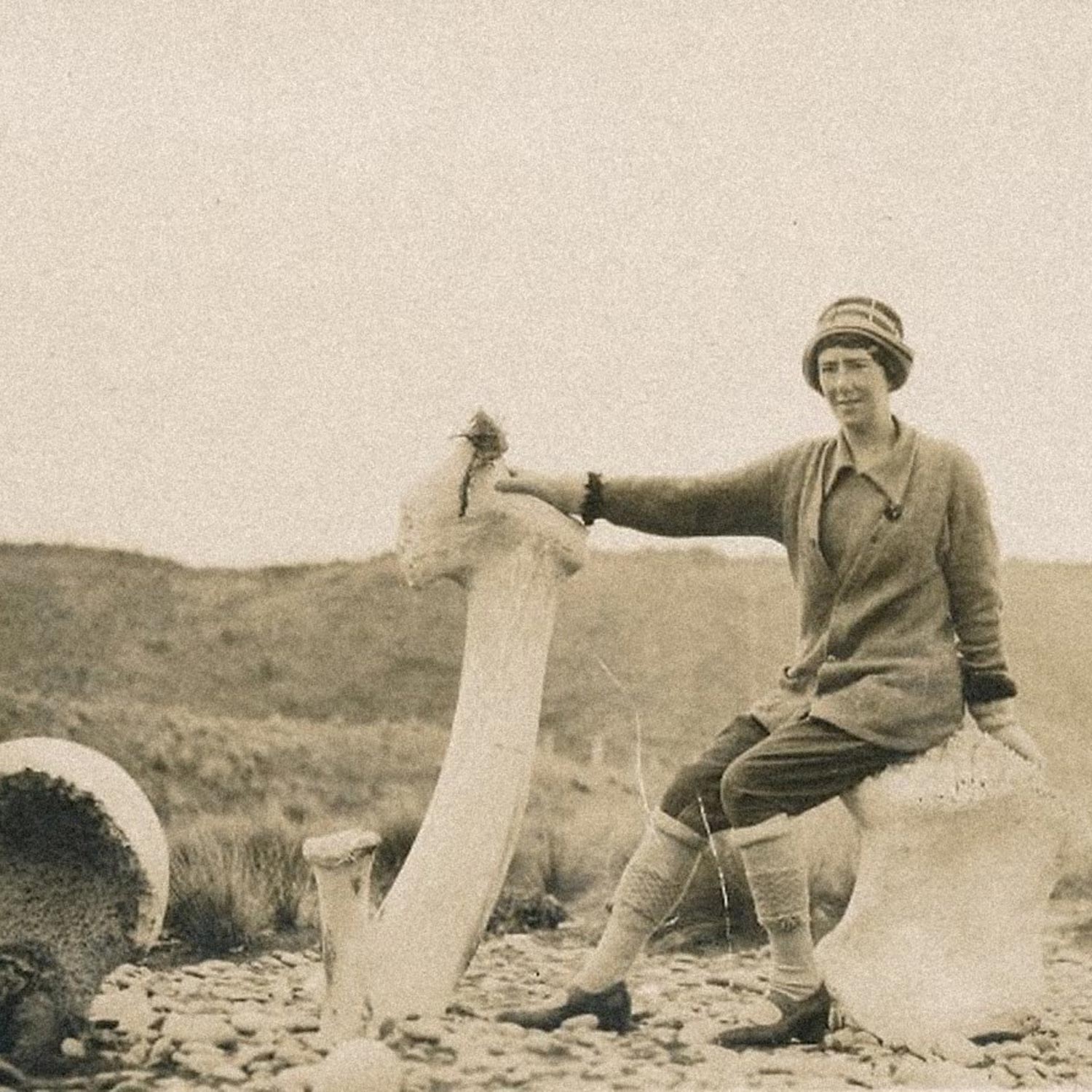
Sepia photograph of Daisy Mackie sitting on the shore at Whakanui beach beside large whale bones, including a tall jawbone standing upright.

If the rugged Whakanui beach could speak, it would have many stories to tell. From the days when tangata whenua traversed the shoreline between the Rangitata and Rakaia rivers, to when a local grocer was apparently robbed by German sailors, there certainly is a lot to discuss about Whakanui beach. Unfortunate whales and visiting seals have laid upon its rocky face, and interesting discoveries have been made over the years which have sometimes left locals with more questions than answers. The mystery vessel On 2 December 1895, it was reported in the Guardian that a mysterious visitor had washed ashore on Whakanui beach. It was not a man, nor a sea-beast, it was something else entirely… an empty fishing boat! The boat had apparently made landfall the previous Friday, 29 November, its origin unknown. It was a flat-bottomed fisherman’s boat, also known as a coble, which was found stranded by two brothers who were out for a stroll. The brothers, named A. and W. Jamieson, harnessed the help of some employees of a Mr. Isaac Thompson, who harnessed the fifteen-foot long vessel to a horse and had it hauled into a gully for safety. Just over two weeks later, on 18 December, there was another report in the Guardian which read as follows: “Some time ago a boat was found on the Wakanui beach and pulled ashore above high water mark. We learn from the police that an officer of the Customs Department was in town yesterday, and made enquiries, the result of which will be probably that within a month the boat will be sold ‘for the benefit of whom it may concern.’” No further mention of the mystery coble seems to have been made in the newspaper, and so we may never know the identity of the runaway boat’s absent owner… Message in a bottle The matter of a poorly-executed hoax, in the form of a message in a bottle, was the subject of a column in the Guardian which was published on 14 February 1891: “Some witling or other a few days ago put a scrap of newspaper in a bottle and left it on the Wakanui beach. On the paper he had written – ‘The ship Kakanui, Captain Best, lost in a gale on the Auckland Islands. This is to let any one know where we are, 3 saved.’ But the clever writer made the mistake of leaving just enough of the print of the Ashburton Guardian, on the margin of which he wrote to enable us to trace the issue, which is that of the 7th February, and the vessel was missing before that date. We circulate pretty widely, but scarcely so widely as all that.” The war comes to Whakanui An event which would soon become a widely-known Mid Canterbury legend was the alleged robbery of Mr. L. C. Turner’s grocery van by German sailors, which occurred on 2 October 1939. The Second World War had been raging for only a month when Turner, who was driving his grocery delivery van near Whakanui beach, was held up and robbed by a group of mystery men who were dressed like sailors. At least one of the men was armed with a revolver. They spoke “with a strong foreign accent”, and in “very broken English” according to claims Turner made to the Guardian. Turner was held at gunpoint while the group of four men took food items from the back of the van before vanishing. As soon as the men left, Turner rushed for the nearest telephone and called the police. Despite their best efforts, the police did not catch the culprits and, apart from a few scattered footprints, found no further evidence of the incident. The next day, Ashburton was gripped by somewhat of a scare, as the story broke in the newspaper under several dramatic headings which read: “Food Stolen Several Mysterious Features Four Men Near The Beach One Man Believed Armed Suggested Work of Foreigners” Several aeroplanes were dispatched to search the coast after the incident, and the Home Guard were employed to search on the ground. However, nothing was found. The incident remains a mystery to this day, but Turner swore to his description of the incident for the rest of his days. At least two theories have been proposed, the first and most popular is that the men were from a German submarine. The second theory, according to an article from 1983 by the late Ray McCausland, is that the robbers were sailors from a ship called the Nuremberg. Like the case of the mystery fishing boat however, we may never know the truth. From the Museum Collection Just down the coast from Whakanui beach, on the other side of the Hakatere/Ashburton River mouth, this whale vertebrae was removed from a beached whale on Ashton Beach by Charles Jaine in the 1920s. An 8-horse team was used to remove other parts from the whale. The vertebrae was used as a foot-step at the door of the Jaine family’s woolshed. It was donated to the Ashburton Museum & Historical Society in 2016. If you find a live stranded whale or other marine mammal, you should contact DOC immediately on 0800 362 468. Unless otherwise stated, photographs and research materials on this page are owned by the Ashburton Museum & Historical Society Inc. This post was modified for this blog and was originally published in the Ashburton Guardian, 27 January 2024.

Continue Reading

Great Storm of 1868: Refuge in “Arms” of Ashburton

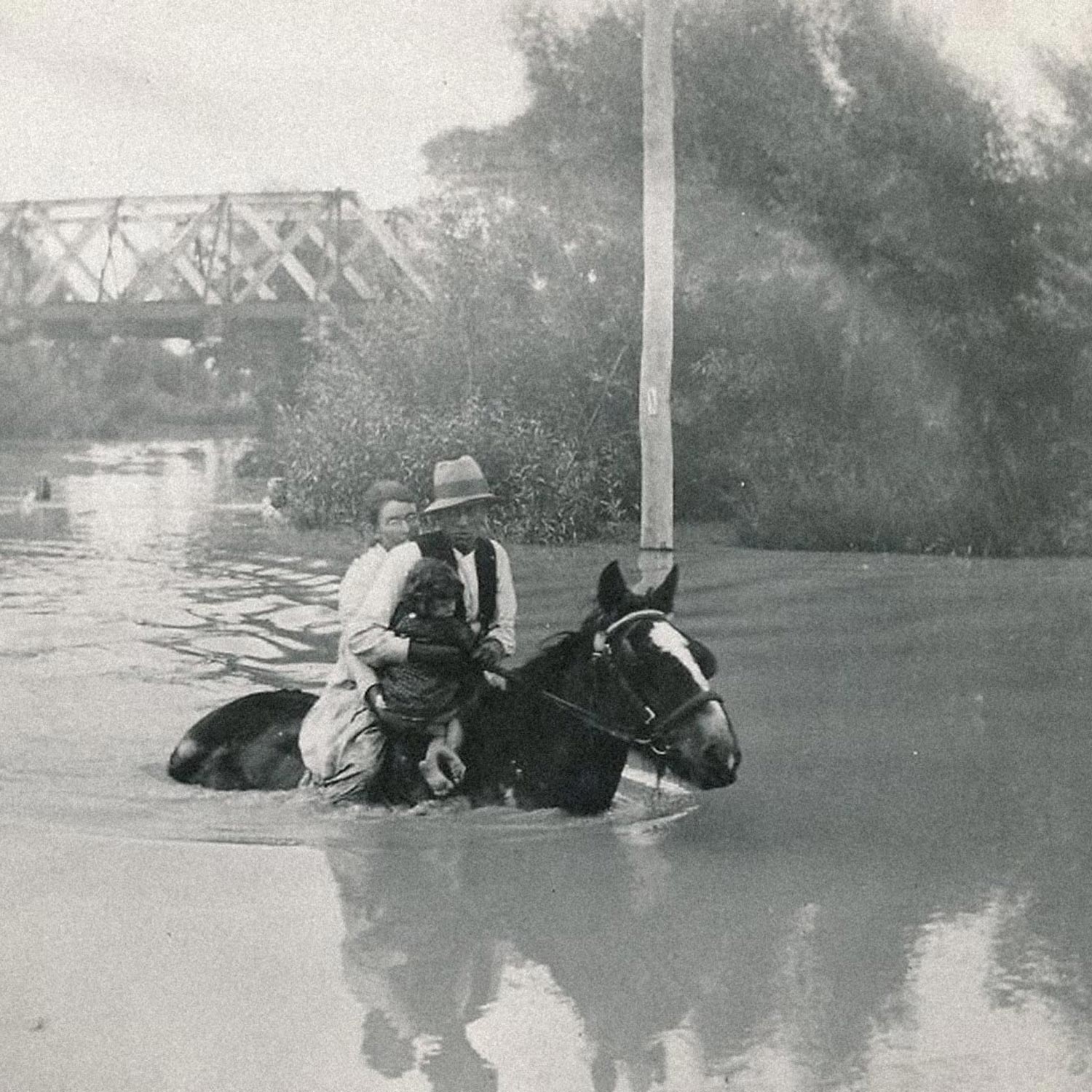
Sepia photograph of a family on horseback wading through deep floodwater, with a bridge in the background.

Two years ago our District experienced the worst flooding in living memory, closely rivalled only by the April 1951 Canterbury flood event. Severe floods have occurred with moderate frequency in the past, including the February 1936 flood event, but these were not quite on this level in terms of sheer flow. On 28 May 2021, MetService issued a red alert for Canterbury, having forecasted 200-300mm of rain in the high country. Two days later, a state of emergency was declared due to the sheer volume and duration of rainfall across Canterbury. 19 river flow recorders owned by Environment Canterbury were destroyed or damaged as the rivers reached record levels. ECan reported that their rain gauge in Mt Somers had recorded its highest 48-hour rainfall ever, at 526mm. According to the Ashburton District Council, the damage to our local roads cost $4 million to repair over six months and uninsurable damage to properties totalled $14 million. Numerous farms and buildings were wrecked, roads were washed out and bridges were battered, including the bridge between Ashburton and Tinwald on State Highway 1. The closure of our town bridge made national headlines and the South Island was essentially cut in half for days. I am sure most local readers will remember the headache that caused! It is expected that climate change will increase the intensity and frequency of extreme weather events like the 2021 Canterbury floods. However, extreme flooding typically occurs anyway once every two hundred years, give or take, which seems almost correct when you examine the Great Storm of February 1868 and the floods that resulted from it. From 4 to 6 February 1868, an ex-tropical cyclone bore down on New Zealand, which resulted in extreme weather conditions and flooding across the entire country. As many as 40 people died during the event and there were 12 shipwrecks reported. Almost the entire east coast of the South Island was flooded. On 10 February 1868, a Lyttelton Times correspondent wrote about their experiences travelling through our district at the time of the infamous storm, under the title “A new chum’s experience of a day and night of the weather and rivers of New Zealand.” Rising river or sinking coach? Our anonymous writer’s account begins in Timaru on Monday, 4 February 1868. That morning, they recall being “tired with the gaieties of Timaru” where they had been “forced to vegetate for four days.” They promptly decided to move on and secured a place on a Cobb & Co. coach headed for Christchurch, aboard which they chose the box seat (next to the driver, raised in front.) The writer soon regrets this decision, as it began raining that morning and did not show any sign of stopping. “After leaving the first station, I was informed by a fellow passenger that we were then on the runs, and that we should not leave them again till we reached Christchurch. What he meant by runs, I was then at a loss to explain, unless it was a continual run of water down my neck for the remainder of the journey.” Before crossing the Rangitata our writer switched places with the aforementioned passenger to sit further back within the coach, but they still found themselves experiencing “by no means an agreeable shower-bath.” While crossing the Rangitata River, the coachman quietly observed that he thought the river was rising, but the writer naively thought the coach was sinking while it plowed through the river. “After this came a long, miserable, dreary wet ride for 18 miles” until the party reached the Hakatere/Ashburton River. “Here, as I thought, my sorrows for the time were over, but alas! In attempting to cross with the pioneers, the coach actually stuck, and began settling so fast that at last the water was up to our waists. We were told we must jump for it, and that quickly, into about six feet of water, with the pleasing reminder that if we jumped a yard wrong, we should feel the full force of a New Zealand current. “Thankfully, all aboard made the jump safely “with only a thorough wetting.” After negotiating another channel on horseback and running through the remainder of the river, they made it to William Turton’s Ashburton Arms accommodation house intact. However, after rummaging through their luggage for a change of clothes, our writer found to their horror that all their belongings were soaked. The coachman drove off without waiting for them, and they were left behind at the accommodation house. “After borrowing a change from the obliging landlord, and getting a good dinner, things assured a much brighter aspect; still the wind kept howling frightfully, and the river was rising, though no thought of real danger occurred to anyone.” Refuge in the Arms of Ashburton The writer went to bed at 10 o’clock that night, expecting a restful night’s sleep, but two hours later they were told to get up immediately as “the river was still rising fast and was, in fact, at full flood.” They go on to describe the following events: “The water was within a few inches of the door. At this time a faint cry was heard, and some men returned, having to wade some distance up to their shoulders, with a woman and a baby, and it was known that the house was flooded, and would probably be carried away immediately. Still the water kept rising, rising, fast; and, after measuring, we found it within an inch of rushing in the house; in fact, it had commenced to flow under one of the doors.” “The agony of the poor people coming in at this time was indescribable; most of them had seen pigs, crops, poultry, sheep, and, in some instances, horses washed away, and their houses nearly floating before they quitted them. Through what can be called only the mercy of God the wind changed, and, as it was ascertained the following morning, the river had broken into a creek, which seemed to carry away a deal of the water.” In closing their correspondence with the Lyttelton Times, our dear writer says “Had it not been for this intervention of Divine Providence I should probably not be alive to write this, my first, and I can assure you I fervently hope my last, experience of the freaks and vagaries of the New Zealand rivers.” Overall, the Great Storm of 1868 and the resulting floods caused between £500,000 and £1 million in damage across the country (roughly $20-50 million today, adjusted for inflation.) Unless otherwise stated, photographs and research materials on this page are owned by the Ashburton Museum & Historical Society Inc. This post was modified for this blog and was originally published in the Ashburton Guardian, 4 June 2022.

Continue Reading

Early Urban Ashburton

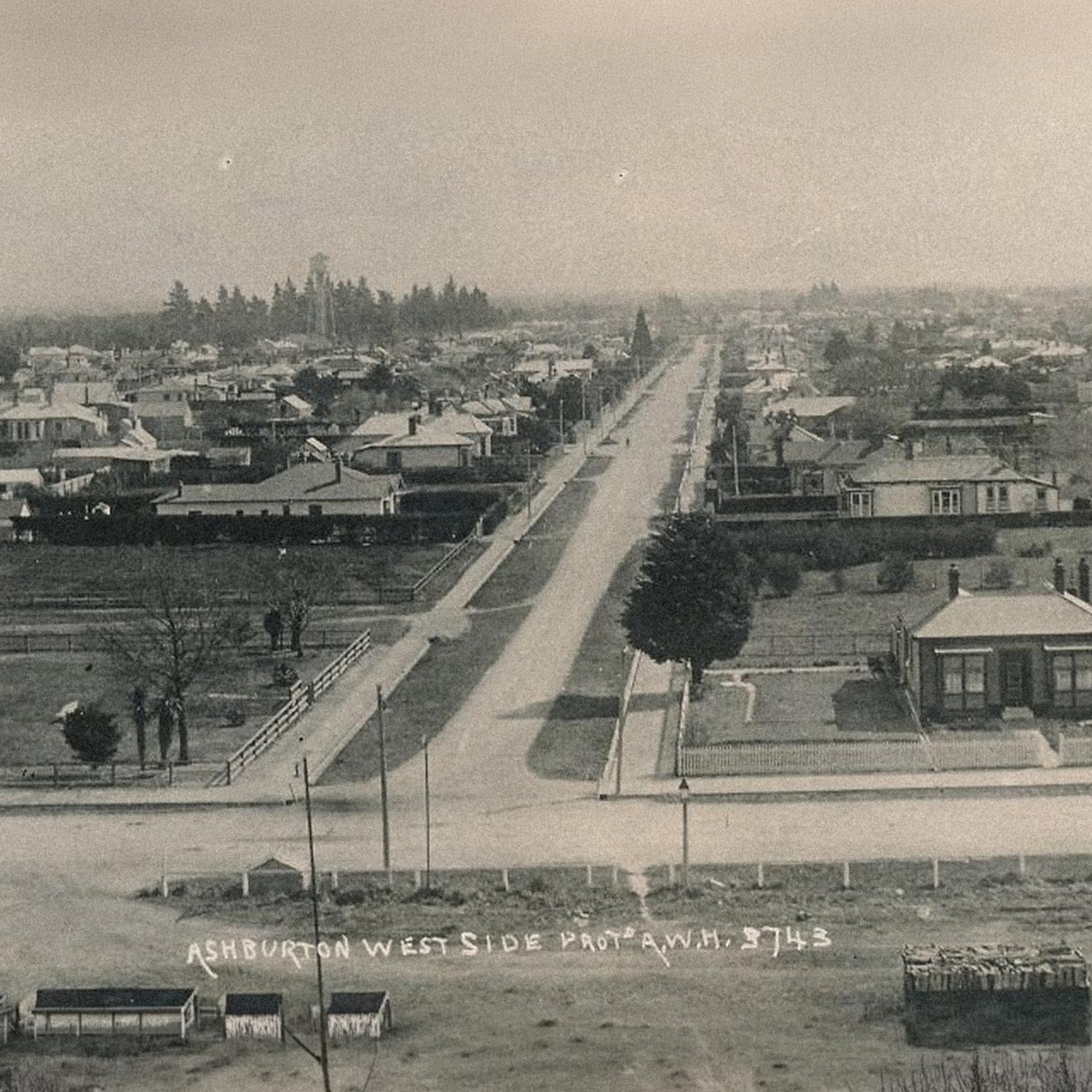
Early postcard view over Ashburton looking along Cameron Street, a wide road lined with houses and trees.

Ashburton as we know it has been constantly evolving ever since the construction of William Turton’s first accommodation house along the Hakatere Ashburton River in 1858. Rural has become urban, paddocks have become suburbs and buildings have been built, moved, modified and demolished. Ashburton was first surveyed by Robert Park in 1863 and from there our town began to grow. Generally speaking, urban Ashburton spread from the vicinity of Mona Square, northwards along East Street, and outwards along the side streets. Shops, offices, grain stores, agents and auctioneers quickly populated our fledgling central business district faster than you could say ‘Ashburton Borough Council’. Before we were even considered a borough, considerable growth had occurred. In 1903, a volume of the Cyclopedia of New Zealand covering the Canterbury Provincial District was published, which included an extensive section about Ashburton. Let’s take a look at how Ashburton was faring as a burgeoning town just after the turn of the century and see if we can draw any parallels between our past and our present. Before we dive into the cyclopedia however, let’s consider the importance of this land before Pākehā settlement and its significance for takata whenua. Our shared past Before towns and suburbs, this little slice of Aotearoa was more than capable of supporting growth and livelihood. Māori were the first to know the land that later came to be known as Ashburton District. This area contained a wide range of natural resources that were sustainably managed and collected, including seasonal foods and stone materials. Travel routes through the region were deliberately punctuated by stopping points which were in the vicinity of such resources, as well as water and shelter. Prosperity for takata whenua in this area and across Te Waipounamu (the South Island) relied on the important matauraka (knowledge) of mahika kai, the concept of valuing the natural resources that sustain life. Early urban landscape Ashburton in 1903 was described as having “the appearance of a healthy, prosperous, inland town, and that it is the centre of a rich agricultural district can be seen by glance at the large grain stores situated in the neighbourhood of the railway. The public buildings, and many of the business premises, are handsome and imposing, and the wide and well-formed streets, on market day especially, present a very busy aspect.” “The town is well built, and the streets and houses lighted with gas. With an ample supply of water always flowing in the side channels, the sanitary arrangements are excellent, and Ashburton is one of the healthiest places in New Zealand. The local industries comprise a woollen factory, flour mills, a brewery, and the Fairfield freezing works.” As for Ashburton’s population at the time, the cyclopedia states that “the recorded population of the borough, within the statutory boundaries, 2,322, does not represent the actual number of residents in the business centre of the district; if the immediate suburbs of Hampstead and Allenton were included, it would amount to at least 5,000.” Unless otherwise stated, photographs and research materials on this page are owned by the Ashburton Museum & Historical Society Inc. This post was modified for this blog and was originally published in the Ashburton Guardian, 12 March 2022.

Continue Reading

The Components of the Humble Kiwi Villa

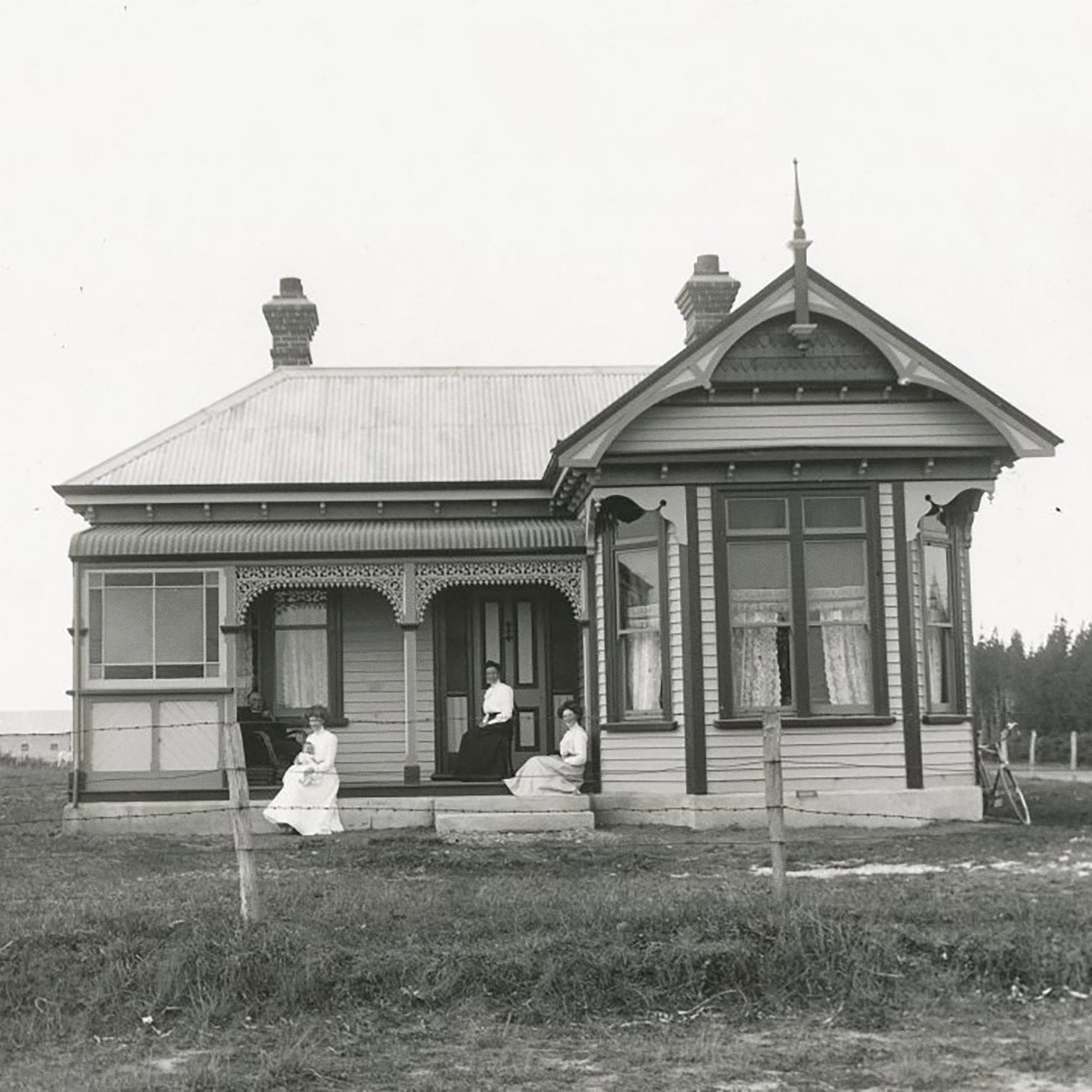
Historic photograph of a family sitting on the veranda of a rural villa in the Ashburton District.

Throughout the closing decades of the nineteenth century, New Zealand was undergoing rapid population growth and huge urban development. Factors such as improved transportation and an influx of steam-powered woodworking equipment gave rise to a new kind of house: the iconic villa. From the 1860s until the end of the First World War, villas were a very popular option for new builds. These bigger, more expensive homes were an iteration on the classic cottages which were so widespread in the preceding years. Construction Villas were constructed almost entirely of native timber, including fixtures and fittings, with a metal roof. There were exceptions to the rule. For example, there is a bay villa on Wakanui Road, designed by Ashburton architect Harry E. Vincent, which was built using bricks from Crum’s brickworks instead of being of typical weatherboard construction. Thanks to advances in machine moulding and woodworking, many villas bore ornate features and ornamentation. These new accoutrements would have been out of the price range for many people just decades before the villa’s rise in popularity. Some of these houses were architect-designed, like the brick villa, while many others were built from pre-prepared plans. The customer would choose their desired floorplan and accessories from a catalogue. As suburbs developed many of the villas seen dotting the streets were built in this fashion. Two-storey villas were also not unheard of. In Jeremy Salmond’s Old New Zealand Houses 1800-1940 it is noted that different features were more common in different regions: bigger verandas in Auckland, cast iron fretwork in Dunedin and narrower two-storeyed designs were preferred in Wellington. Form and function The concept of separating public and private spaces within the home was a central feature of the villa. A villa’s central hallway would usually be cut in two by an ornate archway, which marks the dividing line between the public and private parts of the house. The parlour, or formal sitting room was used to receive and entertain guests (not for everyday leisure) and so it was at the front of the house, while the kitchen and bathroom were at the rear. The best furniture and family treasures were often found in the parlour, where they would be seen and enjoyed by visitors. The reasoning behind the parlour being at the front of the villa may have originated from earlier cottages, in which the closest room to the front door was the sitting room, or the front door opened into the sitting room which acted as a thoroughfare. One of the most striking features of any villa is the bay window, which would typically protrude from the parlour room, facing the street. Walking through the hallway, you would find a couple of bedrooms branching off the long main hallway before you reach rooms such as the kitchen, scullery and pantry. Larger bay villas would have squeezed in another bedroom, bathroom and laundry. Of course, you can’t forget the front veranda; an enticing perch upon which families would sit and enjoy the fresh air. Today we still see it as a prime spot for some outdoor furniture (an old crusty couch will do in a pinch.) A kiwi icon Villas are unmistakably, undoubtedly Kiwi. Each one is a slice of social history, a residential landmark, almost. On many streets throughout Ashburton you will find at least one, or several villas with families or flatmates living in them. With a bit of care and insulation they quite often make great homes despite being what you could say to be a hundred years past their prime. Unless otherwise stated, photographs and research materials on this page are owned by the Ashburton Museum & Historical Society Inc. This post was modified for this blog and was originally published in the Ashburton Guardian, 25 September 2021.

Continue Reading

Tinwald: Southern suburb or more than meets the eye?

Sepia photograph of men in boater hats and a woman with a parasol relaxing on the grass beneath willow trees in the Tinwald Domain.

Tinwald! Is it just a suburb, Ashburton’s little sibling or is it something much more? While the typical traveller passing through town along State Highway 1 might see Tinwald and Ashburton as one big place split in two by the river, us locals know that isn’t the case… There’s something different about Tinwald. In the early days of European settlement, those living on the south side had it a bit harder than their neighbours to the north, which drove forth a sense of pride and independence that still endures today. To illustrate what life was like in early Tinwald and the changes that came over time, let’s take a look at some of the early history as written by Emily Bayliss in her 1970 book Tinwald: A Canterbury Plains Settlement. Life on the south side According to the Ashburton Guardian, an early visitor to Tinwald in 1878 spoke of the township as being “one of those progressive and irrepressible little centres of inland commerce that, springing up in all directions, show[s] the energy and thriving industry of New Zealand settlers, and this is known as the town of Tinwald.” This visitor went on to describe the forthcoming erection of a school and master’s residence, a future church designed by Mr Mountford of Christchurch and plans for the Tinwald Domain. Early traders in Tinwald included grocers, bakers, storekeepers, bootmakers and more. One particular early resident who wore many hats was Thomas Williams: he was a builder, undertaker, cabinetmaker and wheelwright! A mere couple decades prior, instead of a bustling township this unknown visitor would have laid eyes on a flat and swampy expanse, home not to overworked carpenters but instead to thick growths of harakeke/flax. What would become the Ashburton District was once an important section of the Eastern Coastal Trail of Te Waipounamu which was extensively travelled-through and settled by takata whenua. Kāika nohoaka (settlements) and kāika mahika kai (food-gathering sites) dotted the east coast along this important ara tawhito (traditional travel route). Before Tinwald township was laid out, early European settlers used the area as a hunting spot. People from Turton’s Accommodation House in early Ashburton would cross the river to bag wild pigs, ducks and pukeko. Tinwald rose from that swamp and became famous in its own right: John Carter’s Grove Farm and its respectable pedigree of racehorses managed by Edward Gates made headlines and earned Tinwald some kudos in sporting circles. Like Ashburton, farming has been the lifeblood of Tinwald. The Tinwald saleyards were especially important and only closed in 2016, which marked the end of its 138-year run of massive stock sales. Another point of fame for Tinwald is the Domain. The first steps toward laying it out were taken in 1881 and since then it has been praised non-stop for its quality as a grounds for recreation and relaxation. Domestic doldrums… or not? Life in early Tinwald was a mixed bag. Times were tough, but people pulled together and found happiness in each other’s company. Until its amalgamation with the Ashburton Borough in 1955, Tinwald was described as a “self-contained community” and according to Emily Bayliss in her book on Tinwald, the locality was “settled by a working class people, who depended for their subsistence mainly on the surrounding farming country.” The keyword here is subsistence, since “most of the first settlers had very little financial backing” and many could barely afford the rent for their small cottages. In the early days before 1880 there was no Hospital and Charitable Aid Board to dole out relief in the case of sickness or injury. Instead of relying on such assistance, people relied on each other, “the poor helped the poor.” Life was a bit on the rough side for most, but how about the well-to-do? In some cases, a few wealthier residents chose to affiliate themselves with Ashburton rather than be associated with Tinwald. Talk about snobbish, since many people are proud of Tinwald these days and it just goes to show how opinions can change over time. Tinwald today There was once a time when the majority of Tinwald’s residents were older folk of the long-standing variety, who could remember many events and changes around the township vividly; they are still around of course, but due to rapid growth they are now a minority among the great numbers of young families and workers that now live in Tinwald. The little township has changed a lot, but some things have stayed the same: the community spirit and pride sets Tinwald apart from the rest. Emily Bayliss wrote that “in times past the closeness of Ashburton to Tinwald worked to the disadvantage of the latter. Added to that was a feeling that the township was looked on with condescension by its opposite number across the river. However, an inferiority complex never developed. In the words of that unknown visitor in 1878, this ‘irrepressible little centre’ has gone on its friendly, united way to progress.” Unless otherwise stated, photographs and research materials on this page are owned by the Ashburton Museum & Historical Society Inc. This post was modified for this blog and was originally published in the Ashburton Guardian, 11 September 2021.

Continue Reading
Waterton: a township lost to time

The Waterton Hotel

When you come across the scant remains of a place like Waterton, you start to wonder what led to such a fate. The old cemetery on Grahams Road is the last inkling of this once a popular township, which fell prey to issues caused by a need for labourers elsewhere, as well as that classic problem for many rural villages: the railroad did not pass through Waterton. Before the decline Waterton experienced an exciting boom period and was once described as a “favourite health resort” by the 1903 Cyclopedia of New Zealand. As was the case with the village of Barrhill, it all started because of a need for labourers’ housing. Waterton was born out of necessity to accommodate many employees of the Longbeach Estate. In a nutshell, it was labour requirements that gave birth to Waterton Township, and a lack thereof that caused its recession into obscurity. A town is born Waterton was surveyed by Francis Pavitt in 1876. The intended scale was extensive – a central town belt surrounded by town streets and quarter-acre residential sections. William Tuckett Norrish and his family were the first arrivals and they built a home and set up a blacksmith’s shop. Land was sold on Saturday, 22nd of April 1876 which included 139 quarter-acre sections, as well as 10 and 20 acre blocks totalling 6,000 acres. The initial advertisement in the Lyttelton Times mentioned that the blacksmith’s was already up and running, and that there were Government schools close by, daily coaches from Ashburton to Longbeach and Reserves for a church and library. The pitch sounded ideal… and it worked. Bidding was “brisk” according to the initial sale report and less than two years later in March 1878 the Ashburton Mail reported that “at Waterton there are signs of a township. There is a general store, butcher, baker, a general blacksmith and a saddler. Tenders are called for the erection of another store and the new Church of England is to be commenced next week. We have been shown the plans of a neat country hotel”. Before the end of the year, progress had accelerated at an astonishing rate and it seemed that nothing could stop Waterton’s growth. Heyday In the later years of the nineteenth century Waterton boasted a good number of services and facilities. The crown jewel of Waterton was the hotel, which the 1903 Cyclopedia of New Zealand described as having “24 rooms including the dining room and four sitting rooms. A balcony runs round the house affording on the one side, a splendid view of the sea and on the other, of the picturesque neighbouring country, with the hills in the distance. Waterton is a favoured health resort. The house throughout is a model of cleanliness. A good table is also kept. Stabling is provided and there are accommodation paddocks for sheep.” Despite periodic closures due to licensing issues, the Waterton Hotel was a great asset to the township. The Waterton Store was also important since it sold groceries, confectionery, materials, clothing, hardware and footwear. It was without a doubt an essential service for this once-burgeoning rural community which boasted a population of 235 people at its peak. Concerts and balls were common at the hall, which used to be the library. Aside from regular gatherings there were numerous special events which included a dance to celebrate the electrification of Waterton in 1925, a concert involving the new ‘wireless’ radio in 1926 and other entertainments. Magic lantern shows in the 1920s, silent movie screenings with piano accompaniment and talkies were shown later on by Len Colville before “pressure from outside stopped them being shown.” Improved means of transport allowed Waterton locals to access the Ashburton Public Library, which led to the closure of the library in 1941, but it continued to be used as a hall until its final closure in November 1974. The slow decline of Waterton eventuated in the sections that made up the township and surrounds being turned into lifestyle blocks in the early 2000s. Waterton cemetery The main bulk of what was once Watertown Township was on either side of Russells Road where it joins Grahams Road. The cemetery at Waterton is the last remnant of that community in situ, situated just down the road on the East side of where the township once was. The first interment was that of James Leyton in May 1881, a month before the Waterton Cemetery Board had even erected a fence or front gate. The cemetery is still open for burials to this day and last year marked 140 years since the first burial there. Not only is the Waterton Cemetery a symbol of what once was, but it is still an important place for current residents and represents the enduring identity of the area. However, the cemetery is not the final legacy of Waterton. The Church of St Philip and St James, which once served the Waterton community for a very long time, was moved to the site of The Plains Vintage Railway & Historical Museum at the Tinwald Domain in 1976 and is expertly well cared for; a happy ending for a building that is still dear to many people. Special thanks Research for this story came mainly from the fantastic and authoritative book “Miles of Tiles Revisited: A Journey through Longbeach and Surrounding Districts History” which was compiled and written by the late Gilmour Blee. Unless otherwise stated, photographs and research materials on this page are owned by the Ashburton Museum & Historical Society Inc. This post was modified for this blog and was originally published in the Ashburton Guardian, 3 August 2021.

Continue Reading

Quick history of Barrhill: J C Wason’s model village

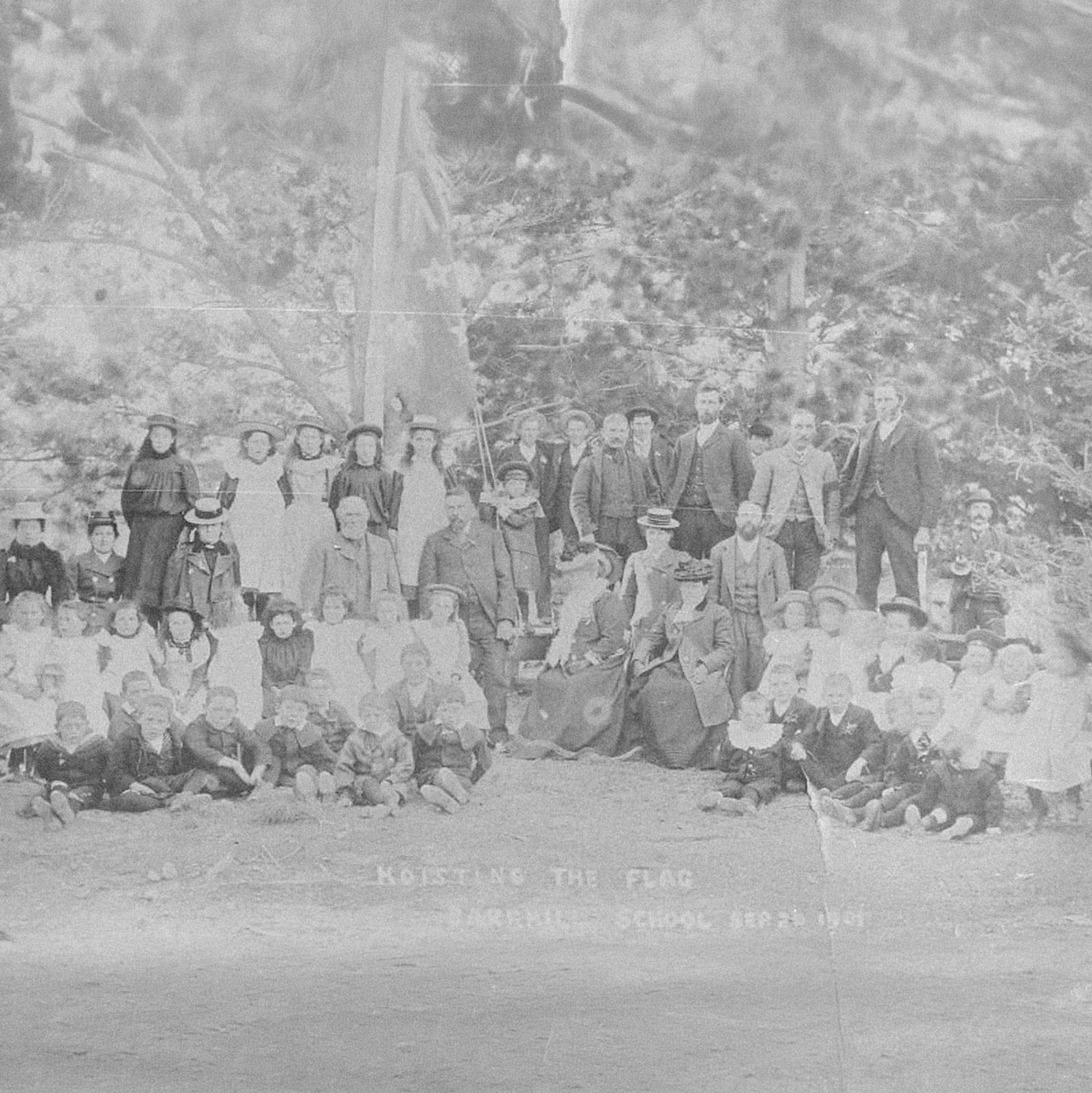
Black-and-white photograph of a large group of parents and schoolchildren posed in rows outside Barrhill School for a flag-hoisting ceremony in 1901.

What remains of the quaint model village of Barrhill is undeniably unique, the few original buildings standing as a reminder of what was once a thriving settlement and a dream-come-true. Barrhill was laid out in the 1870s by John Cathcart Wason, owner of the Corwar Estate, to accommodate his workers and their families. Designed to serve a small yet prosperous community, Barrhill enjoyed a period of stability before declining after Wason sold up in 1900. As quickly as Barrhill rose from nothing, the settlement’s population shrank and Wason’s dream died out. The closure of the school in 1938 was the final nail in the coffin. The birth of Barrhill John Wason, who was described as a “massive” man of six foot six, took up 20,000 acres by the Rakaia and renamed the run to Corwar, previously known as Lendon. The name Corwar came from his previous home in Ayrshire, Scotland. After managing to transform the run from a tussock-ridden wasteland into arable land, he made a large portion of it freehold and eventually the whole of Corwar was purchased by 1878. Wason was a keen planter, and his passion for trees led him to develop vast plantations that were visible across the Rakaia for miles as early as 1885. He built a homestead of 20 rooms, surrounded by rare trees and complete with modern outbuildings, a lodge, and gate-keeper. Wason was becoming more successful by the minute, yet he was seemingly unsatisfied with his progress. A belief he brought from Scotland was that all farmworkers should own their own homes, and so he envisioned a dedicated village to serve Corwar and house its staff. This was to be Barrhill. Perfect by design Barrhill was meticulously designed not only to serve a practical purpose but also to reflect certain sentimentalities and beliefs held by J C Wason. The plan for Barrhill was drawn up by Charles F Barker and is dated the 24th of March 1877. There were 28 sections for sale, and 4 large sections bordering the central square were set aside for the church, vicarage and school. Spirituality lay at the heart of the village as evidenced by the nearly 145-year-old church of St John the Evangelist that still stands right in the middle of the settlement. Trees featured heavily in Barrhill’s design, which is still known today for its tree-lined avenues. Birches were planted along the east avenue, oaks on the west and the market square was planted with both elms and oaks. It took until 1975 for the full extent of Wason’s planning to be noticed. It was in that year that Bill Irwin took an aerial photograph of Barrhill which showed the trees forming three circles which are assumed to represent the Holy Trinity with the church at the middle. Regardless of whatever angle you view it from, it is clear that the village of Barrhill was crafted by Wason with keen attention to detail and strong purpose, The rise and fall The first house plot at Barrhill was bought on the 5th of December 1877 by hotelkeeper George Rimer, and so a hotel was one of the first structures in the village. The Barrhill school opened its doors on the 7th of June 1878 with 23 pupils on the first roll. Barrhill prospered from the outset as sections were filled up by, predictably, labourers, farmers, and various workers and their families. The village settlers were not all just farm workers; there was Auguste Joen the blacksmith on Lot 6, James Bishop the baker on Lot 8 and Christopher Hammond the gardener on Lot 28, to give a few examples of exceptions. Before the freezing works were built at Fairton, Barrhill was even the site of a mutton boiling-down works which processed up to 100 sheep a day. Prices for sections varied, presumably due to locations and when the sections were bought; however it is still hard to initially fathom why William Radford had paid £125 for Lot 13 in 1878, whereas John Spring paid just £5 for Lot 24 in 1901. This may be to do with the fact that villagers were leaving as early as 1886, due to the depression and the gradual sale of Corwar. On top of this, the railway from Rakaia to Methven bypassed Barrhill in favour of Lauriston, which took a further toll on the area. Remnants, not ruins Barrhill school eventually closed and consolidated with Lauriston school 10 kilometres away in 1938 and the Barrhill area gradually reverted to farmland with just a few houses remaining alongside the church, the old school building and some other lasting features of a failed dream. The gatekeeper’s lodge at the entrance to Corwar, which is now a fascinating small museum, is another good example of Wason’s distinctive style and is furnished to appear as if it is frozen in time. Barrhill is also home to a historic cemetery, squashed tightly between two paddocks on a long, thin, grassy section. The few graves that adorn the far end of the cemetery are a reminder of what once was, and the fact that so much of the section is empty, unfinished and unassuming, speaks for itself. Photographs and research materials on this page are owned by the Ashburton Museum & Historical Society Inc. This post was modified for this blog and was originally published in the Ashburton Guardian, 12 June 2021.

Continue Reading

True Crime: Rakaia

Postcard portrait of Amy Bock dressed in men’s clothing, standing in a long overcoat with a high collar.

Ever since I started writing for the Guardian and this blog, I have found myself gravitating towards the odd and unusual. If you have followed us for a while, you will remember several articles about odd photos, weird crimes and unusual occurrences involving some very unique personalities. Many of the lives we’ve talked about have been admirable ones, however I have also touched on the lives of some less-than-savoury eccentrics such as the falsely qualified phrenologist Lio Medo, the Domain tree thieves Thomas Nolan and Jeremiah Hefferman, and more. Ashburton’s past contains a veritable rogue’s gallery of foolish petty criminals. While undertaking some basic research, I was skimming through “Rakaia: Our History” by Janine Irvine and the Rakaia History Group and came across the section on the Rakaia police station, the old jail and the courthouse. As you can imagine, I caught the criminal bug once again and I decided to base this week’s post on… yet more historic criminals and cases from our own backyard. Amy Bock: gold digger extraordinaire The exploits of the infamous Amy Bock as described in the Rakaia book are nothing short of amazing. Amy was an experienced con artist. Newspaper reports from across the country predating her arrival in Rakaia paint her as a cunning, uncaring and kleptomaniacal woman with a penchant for fraud. Having come to Rakaia in 1904, the charismatic “Amy Chanel” soon weaseled her way into a cosy job as John Gardiner’s housekeeper. Unbeknownst to everyone, she had only just been released from jail in Christchurch. John gave Amy a cheque for two pounds which was to pay an account in town, which she changed to twelve pounds and handed off to a man whom she asked to purchase goods for her. According to the Guardian, he did this and then gave her the goods and the change which she pocketed. Amy tried to blame the forgery on the man who helped her, but none were convinced and she copped a three year prison sentence, given her history. After her release, she continued to target unsuspecting men across Canterbury until she settled on an exciting new alias – that of a wealthy farmer named Percy Leonard Redwood. Amy posed as Percy for some time and seemed to really have gotten into character. She travelled to South Otago and caught the eye of Agnes Ottaway, a wealthy spinster. “Percy” led Agnes on and they were wed in April 1909, but Amy could not keep the act up for much longer. Bad debts and suspicion eventually culminated in her arrest, leaving poor old Agnes to feel terribly embarrassed about the false marriage. Amy reportedly continued to swindle her way through life until her death near Auckland in 1943 at a ripe old age. A more serious case The shocking case of Thomas Dalziel’s murder stands in contrast to the relatively light-hearted antics of Amy Bock. In 1887, a widow by the name of Martha Dalziel, who was suffering from alcohol abuse and some mental health problems, tried to drown herself and her son in the Rakaia following the death of her husband Tom. She worked as a housekeeper at the Dunsandel Hotel until she was asked to leave on account of her alcoholism, and after missing the train to Rakaia she was last seen walking there with her boy. John Leebody, bridgekeeper, saw her carrying her son across the bridge at midday before she stopped in at the South Rakaia hotel for a few drinks. She then headed off and was spotted by Catherine Thompson walking across the paddocks. Catherine got her brother to come with her as she watched Martha head down to the water, and to their horror they witnessed Martha tie her son to herself and plunged into the water. Help was called for, and a local boy found them further downstream; the child had drowned but Martha survived and was sent to Christchurch and tried for her son’s murder. The story of Martha and Thomas Dalziel is definitely one of the more sinister cases to come out of Rakaia, and while she reportedly loved her son very much she was suffering from a potent combination of sorrow and alcoholism that resulted in tragedy. Setting an example To finish on a lighter note, here is an amusing anecdote told by Eric Johnston in the Rakaia book reads as follows: “The last Court I can remember, or anybody being in it, was a joker from Bankside. He was caught in the pub after hours or something, so the Constable decided to make a big case from this and set an example of this poor guy. They brought someone to represent him at the Court and they put the Constable in the box to give evidence. The defendant interviewed the Constable and asked, “Have you broadcast this around the town and discussed this case with two or three of your cobbers around the town Sir?” knowing full well the town was talking about the case. He had to answer yes so the case was dismissed! The Constable pulled on his hat and as he got out the door his hat knocked off and the whole court laughed-it was one hell of a joke!” “Rakaia: Our History” is available for research by appointment at the Ashburton Museum. This post was modified for this blog and was originally published in the Ashburton Guardian, 31 October 2020.

Continue Reading

The Space Balls: When Cosmic Junk Landed in Mid Canterbury

Black-and-white photograph of a DSIR scientist in a white coat examining the burnt-out hole in the first space ball.

I am sure that many of you who are familiar with some of the Ashburton District’s weirder occurrences have rolled your eyes by now. It has been a while since a full-blown story has been published on the space balls, but I am sure that a lot of you will not need reminding of these strange events. For the uninitiated, the space balls are a set of mysterious metal balls that fell from the heavens above Mid Canterbury, and landed in paddocks across the Ashburton District. Looking back on newspaper articles from the seventies and the decades following, it is very interesting to see the contemporary theories surrounding these mysterious metal orbs, and the explanation is surprising – although obvious. The spheres appear The story of the space balls begins in 1972, with local farmers discovering odd objects in their paddocks across the Ashburton District. On April 3rd 1972, a brilliant light was seen crossing the sky above Manapouri at 1 am, and was observed fragmenting into 15 – 20 “pieces” above Queenstown before travelling over Lake Aviemore. The meteor-like anomaly flared and disappeared for a moment, before five distinct tracks of light reappeared and were last seen over Ashburton. Later that same day, John Lindores of Huntingdon discovered a large metal ball on his property, 200m from his home. According to a Guardian retrospective on these events by Annie Studholme, the puzzled Mr Lindores ended up calling the police. Sergeant John Wheeler came to investigate and determined that the object had been “dropped from a considerable height.” The orb weighed 13.6 kilograms, was 380mm in diameter, and had an unusual burnt-out hole on one side, the edges of which seemed to have been warped and bent back as if the ball had been exposed to extreme heat. On the other side of the ball, a protruding ring with a small hole stuck out from the surface of this mysterious object, which was clearly welded together from two halves. Sergeant Wheeler contacted the technical staff from the Royal NZ Air Force as well as the US Navy. The next day, Captain Boucher of the US Air Force tracking station at Mount John, Lake Tekapo, came to examine the ‘space ball’ as it was now known. The only thing he could determine for sure was that it was “only a small piece of a large object.” Its origins could not be clearly determined, and so as a precaution the space ball was left covered in a cell at the Ashburton police station in case it proved to be radioactive. More balls make a landing Eventually, the National Radiation Laboratory of Scientific and Industrial Research in Christchurch revealed that the space ball was not radioactive, before the object was sent up to the DSIR in Wellington. The DSIR found that it was made of a titanium-based alloy, common in the construction of air and spacecraft. Not long after the first ball’s arrival, another showed up on Gavin Thomson’s farm at Hinds, and then another in North Otago, followed by two more – one at Lynnford and another one near Hinds. While all this was happening, both the United States and the Soviet Union denied responsibility for the space balls which had now enthralled the collective imaginations of Mid Canterbury. Later in 1972, the Hinds Gymkhana Club tried to secure the space balls for a display at their annual Labour Day gymkhana, but were denied this by the Minister of Foreign Affairs Sir Keith Holyoake. After this spate of findings, things calmed down and the space balls were not mentioned much in the years following the phenomena. Six years later in 1978, another space ball made a landing in one of John Lovett’s paddocks at Eiffelton, and the same procedure was followed as with the last space balls – it was sent off to be tested for radiation, and this test came back negative. Another ball was found too, but these later incidents were debunked and these copycat balls were found to have been modified sea floats, which were burnt with a blowtorch to give the impression of having entered the Earth’s atmosphere. Real or hoax? Naturally, some speculated that the space balls were an elaborate hoax – one which we might compare today to the mystery of the shiny metal monoliths that are still appearing in odd places around the world. However, the idea of the balls being a hoax was discounted by the fact that the alloy that comprised the space balls was very expensive and hard to manufacture. As mentioned before, the US nor the USSR would claim responsibility for the space balls, but speculation pointed towards the most likely origin for the space balls – that they were in fact spacecraft parts. It was not until 2002, when certain government documents were declassified, that the truth of the space balls could be certifiably explained. The first set of space balls came from the Soviet Venus probe Kosmos 482, which separated into four pieces in an Earth parking orbit while attempting to maneuver into a Venus transfer trajectory. Two of these pieces remained in low Earth orbit before descending on New Zealand, setting off the whole space ball phenomena. In May, 2025, the remainder of Kosmos 482 finally returned to earth, crashing into the Indian Ocean and thus closing a chapter in the history of cosmic history… This post was modified for this blog and was originally published in the Ashburton Guardian, 27 February 2021.

Continue Reading