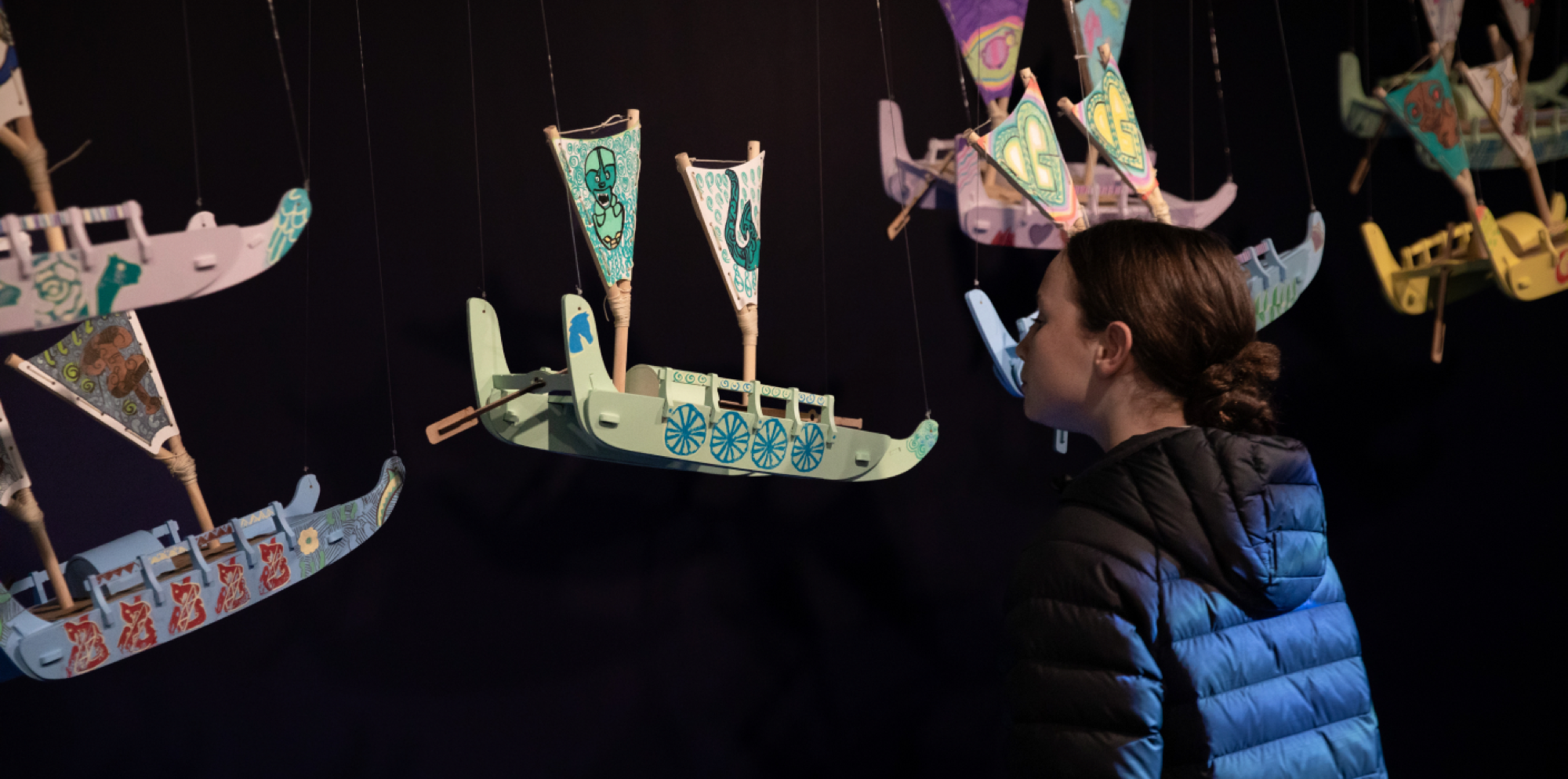
Rokowhiria

Learn

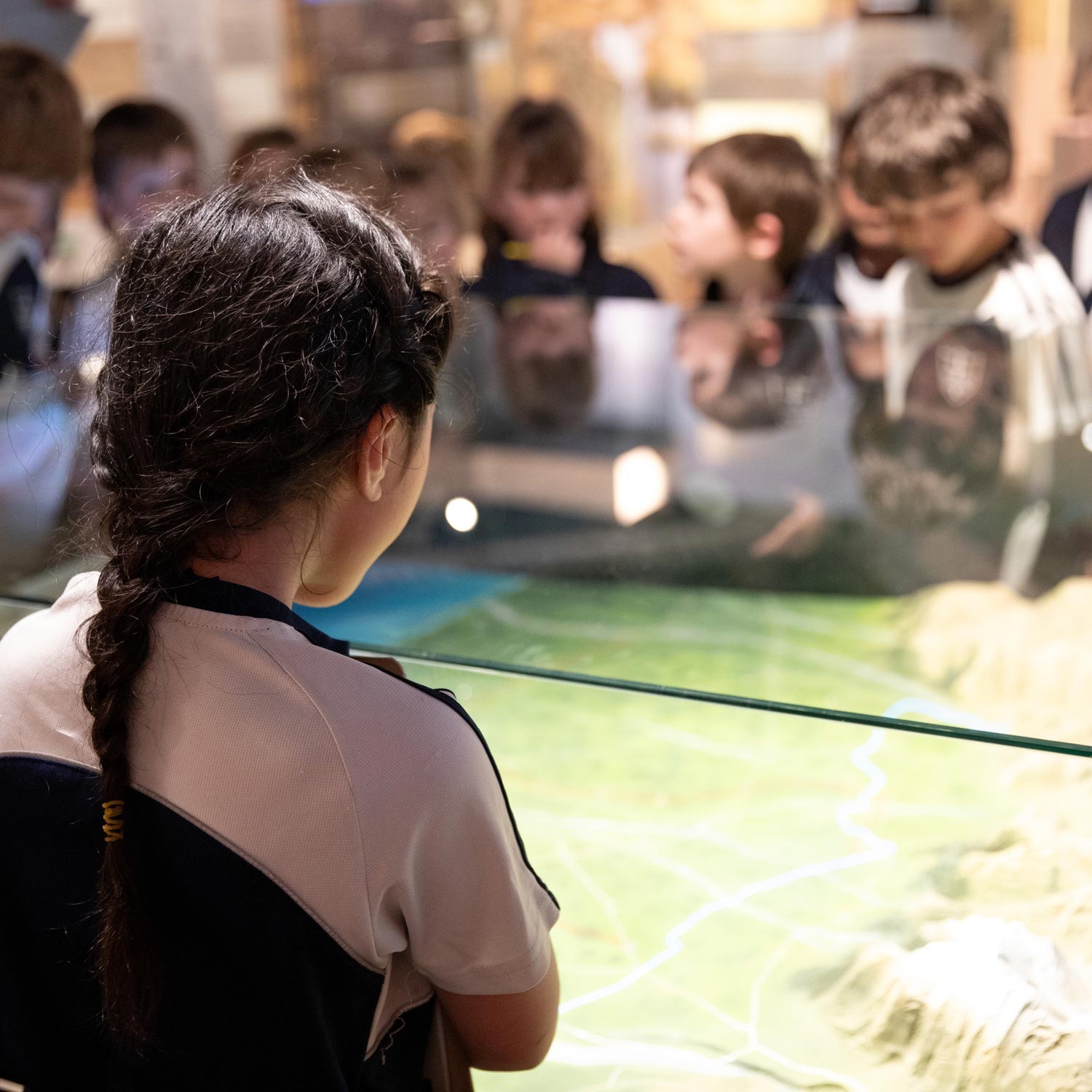
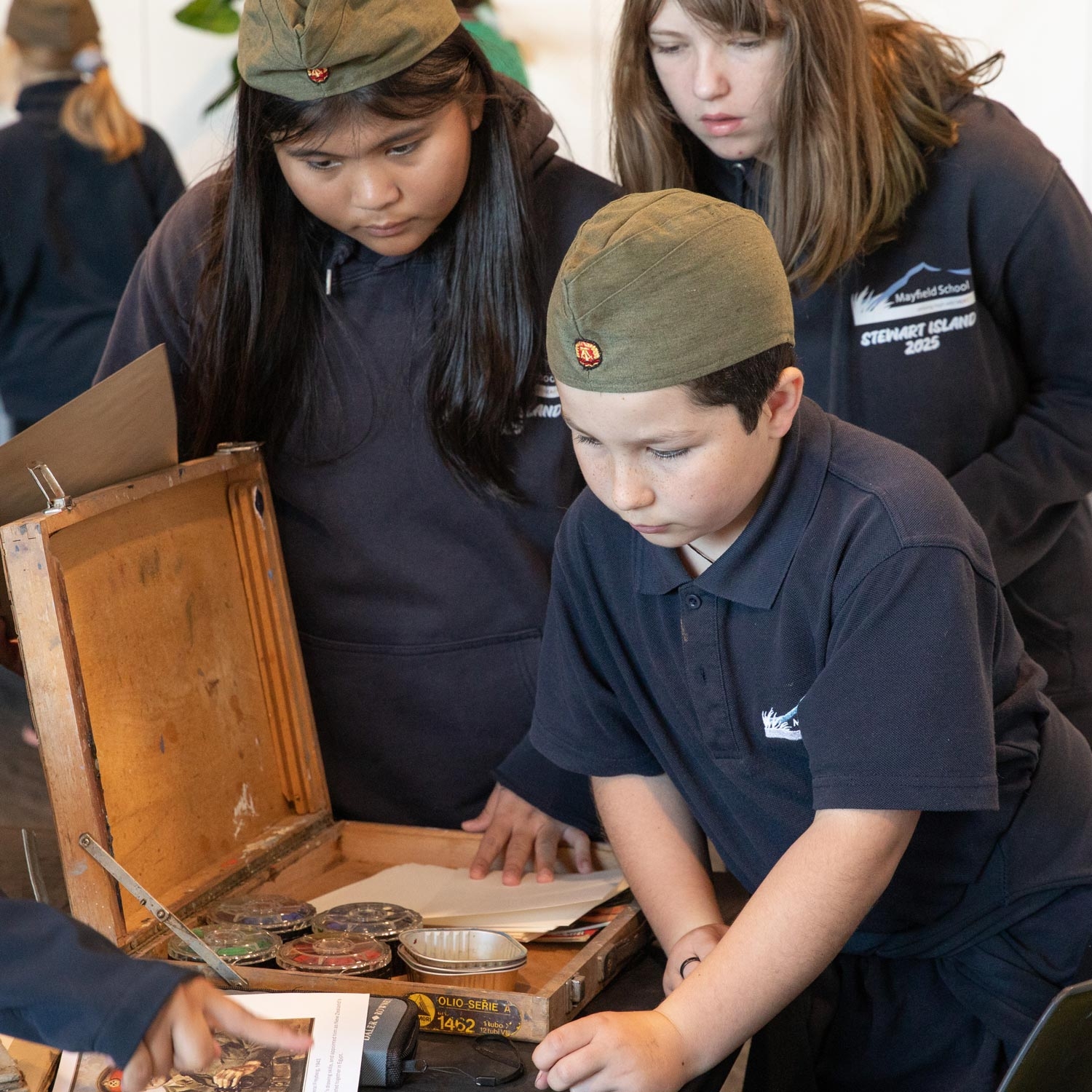
A school group in the gallery at Rokowhiria

Rokowhiria provides creative and engaging learning programmes to suit groups of all ages. Between our art and heritage collections and our range of changing exhibitions, we have access to a wealth of information about local history and visual art.

Education

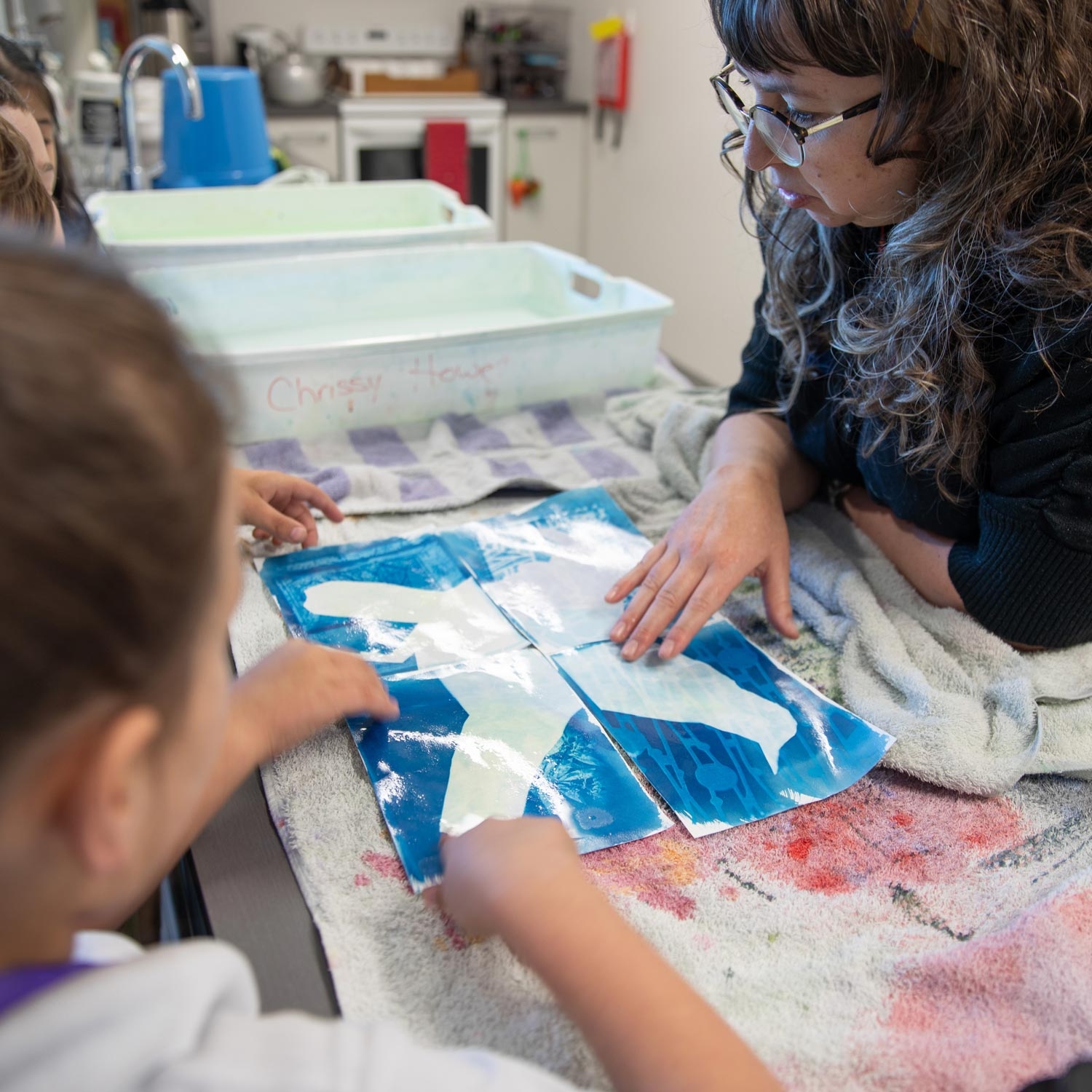
All school visits and materials are free and can be tailored to your classroom content and developed to link to the New Zealand school curriculum. Workshops are generally 90 minutes long and include a tour and discussion, followed by an interactive activity, which is often art, drama, or literacy-based.

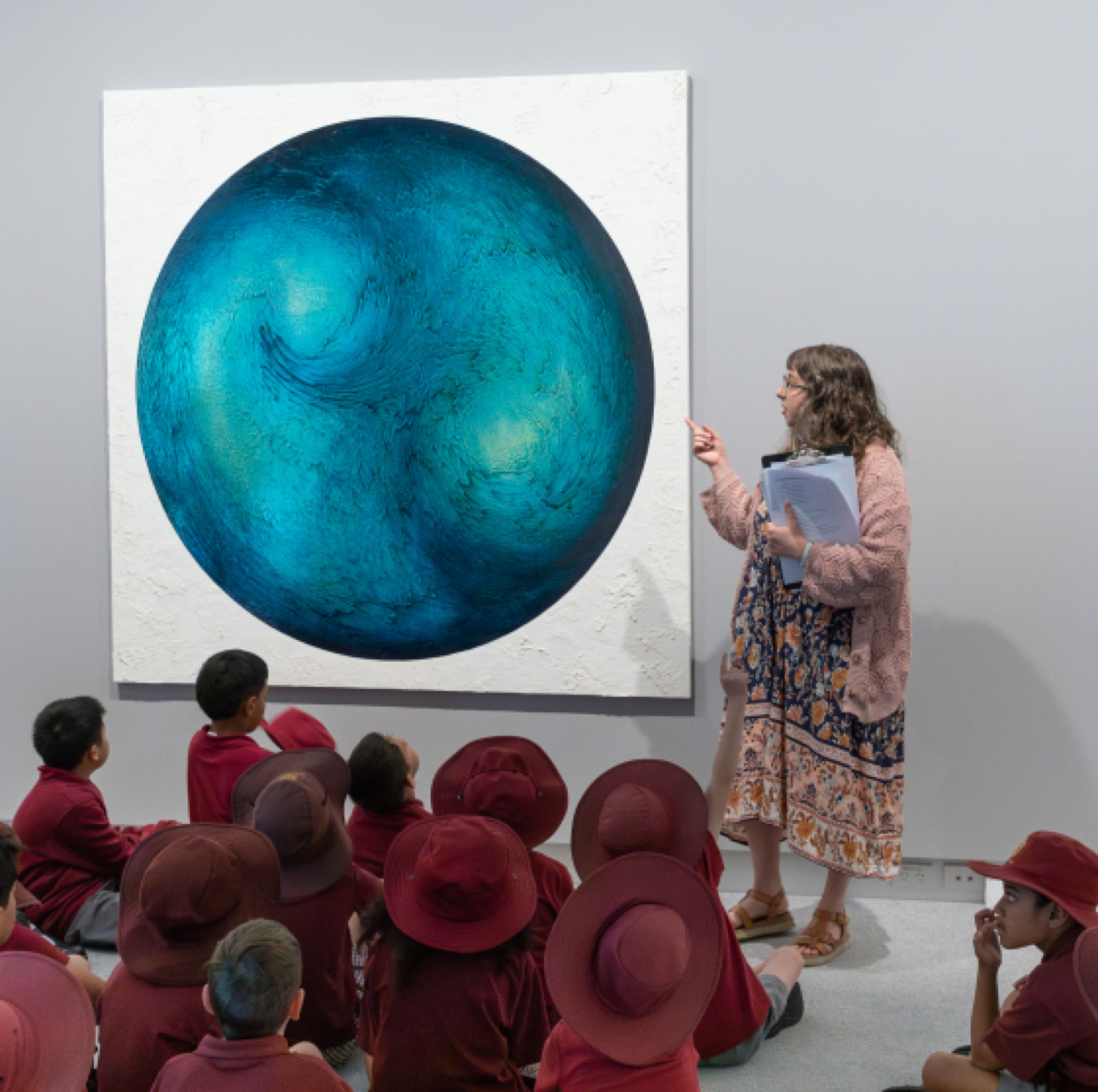
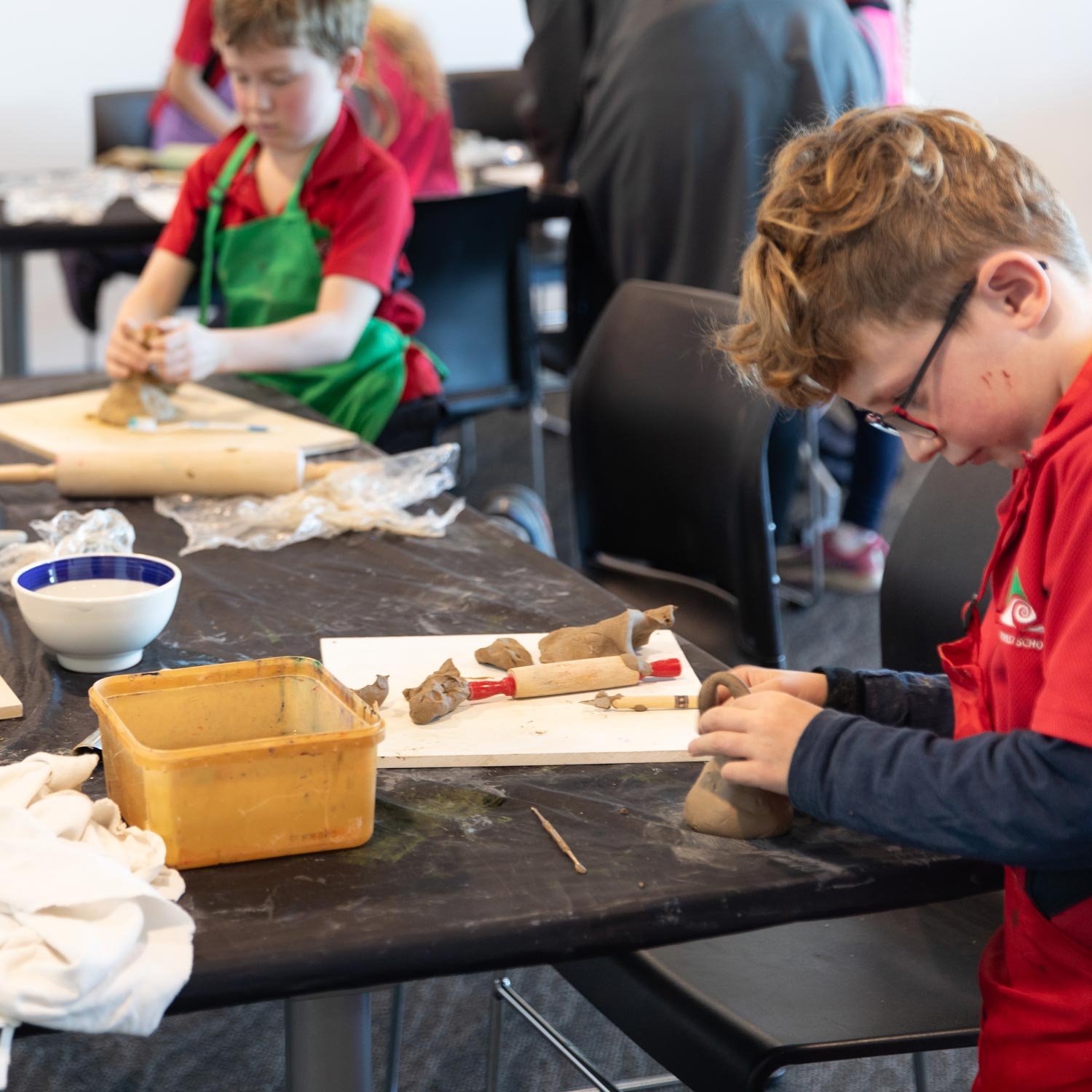
Allenton School pupils at a workshop

Regular School Programmes

Booking form

Select preferred day/s of the week
Select preferred time/s of day
Would you like to visit Rokowhiria for your programme, or organise an outreach session at your school?

School Visit Guidelines

A workshop in progress at Rokowhiria
Ratios

For visiting Rokowhiria, we recommend organising an adult to student ratio of:


Years 0-31:5


Years 4-81:8


Years 9-101:15


Years 11-131:30


It would be helpful if teachers are able to carry a class register in the case of an emergency.

Arriving at Rokowhiria

Please gather your group outside before entering, and check in at the front desk so our team can help you.

Help us protect the exhibitions at Rokowhiria

Please do not touch the artworks or objects, and leave food, drink and large bags at the entrance.

Publicity

We sometimes photograph visits for our newsletter and social media. Let us know on arrival if you would prefer not to be photographed.

Materials

All materials for workshops are provided free of charge.

Risk Assessment and Management (RAMs)

A RAMs form for school visits is available on request. Contact our Learning team and we will send it through.

Collections

Rokowhiria cares for and maintains three collections ranging across art and heritage. These collections belong to the Ashburton Art Gallery Inc.,1 the Ashburton Museum & Historical Society,2 and the Ashburton District Council.3

Ashburton Art Gallery Inc. Collection
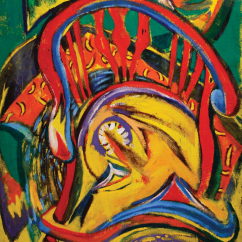
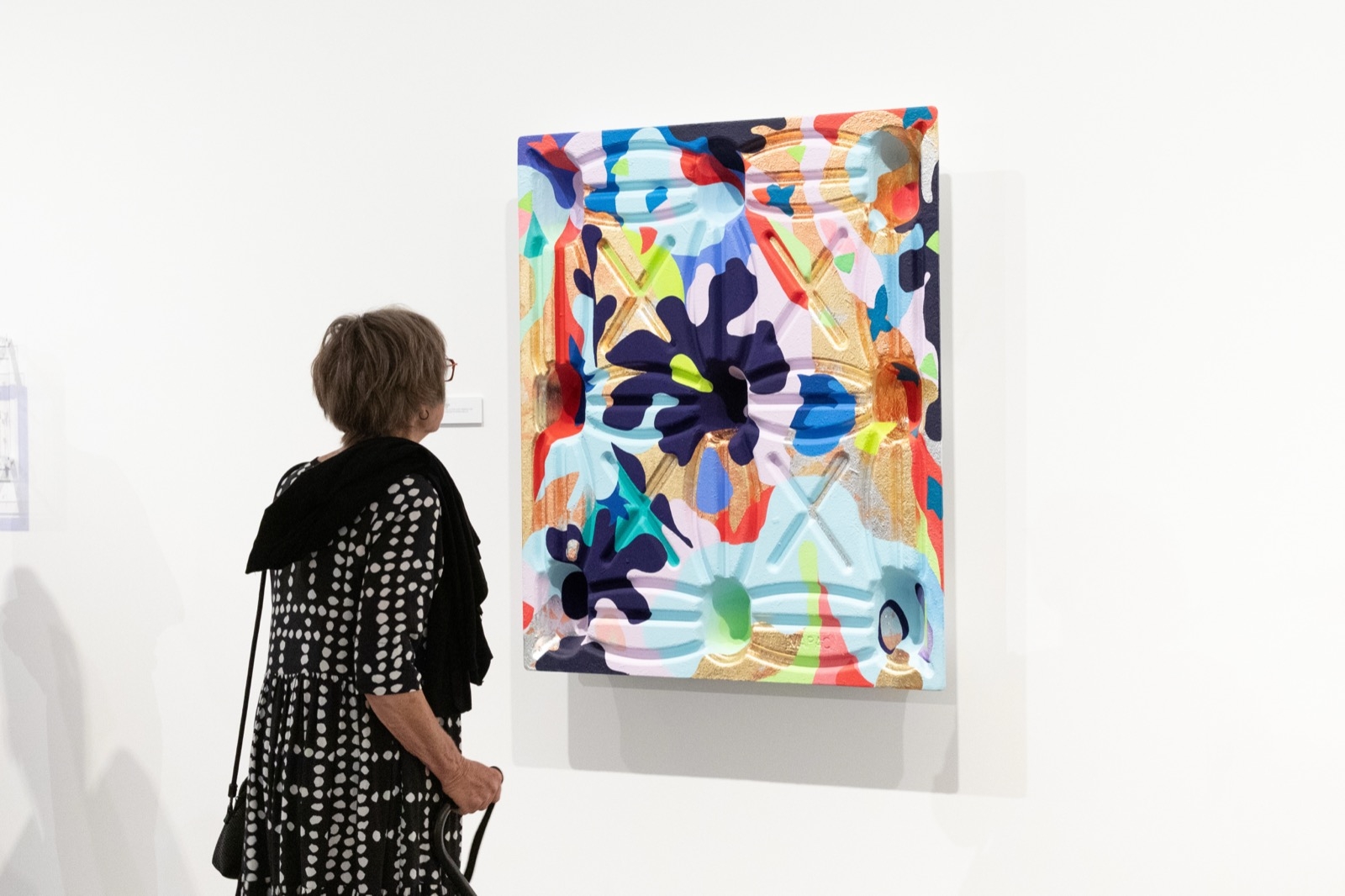
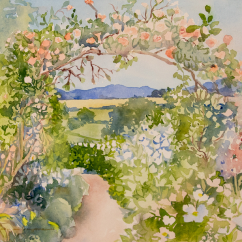
A painting from the Ashburton Art Gallery Inc. collection

The Ashburton Art Gallery Inc. collection consists of over 1000 works, plus over 2000 works held on long-term loan. At the centre of the collection is award-winning children’s book author and illustrator David Elliot, whose works make up over half of the permanent collection, and a large majority of the works on loan. The collection also includes pieces by local and significant artists such as Philip Trusttum, Jenna Packer, Rudolf Gopas, Kath Von Tunzelmann, Michael Armstrong, and Austen Deans.

View Collection

The Ashburton Museum & Historical Society Collection

A lantern from the Ashburton Museum & Historical Society collection

The Ashburton Museum & Historical Society collection was formally founded in 1976, but contains material collected by the Society from as early as 1958. Consisting of over 10,000 objects, 12,000 archival records, and 220,000 photographic prints, negatives, and digital images, the majority of this collection has been donated to the AM&HS by the general public. As a rich record of the people, places, and stories of the Ashburton district, noteworthy aspects of the collection include negative collections from significant photographers such as Gordon Binstead and Charles Tindall.

View Collection

The Civic Art Collection

A painting from the Civic Art Collection

The Civic Art Collection, owned by Ashburton District Council, consists of 220 works. The collection includes several large-scale artworks commissioned for the opening of Te Whare Whakatere in 2024, including Te Kākano by Hannah Kidd. Other highlights include several significant works by Olivia Spencil Bower, Austen Deans, Llew Summers and John Badcock. Rokowhiria also cares for the Ashburton District Council’s heritage collection of operational records and social history objects, including records of former local government boards and councils.

View Collection

Research

The reading room at Rokowhiria

Rokowhiria houses large collections of archival records, photographs, collection objects, and artworks. Our team can help you with questions about local history, genealogy, artworks, property information, newspapers, and more. If you are interested in doing research related to any of our collections, get in touch with our Collections team and they will be in touch to arrange a meeting. Please note that while the first thirty minutes is free of charge, more in-depth research may incur a fee — for more information, read section 26 of the Ashburton District Council Fees and Charges document.

Enquire about

Stories

Tales from the Whakanui Shore

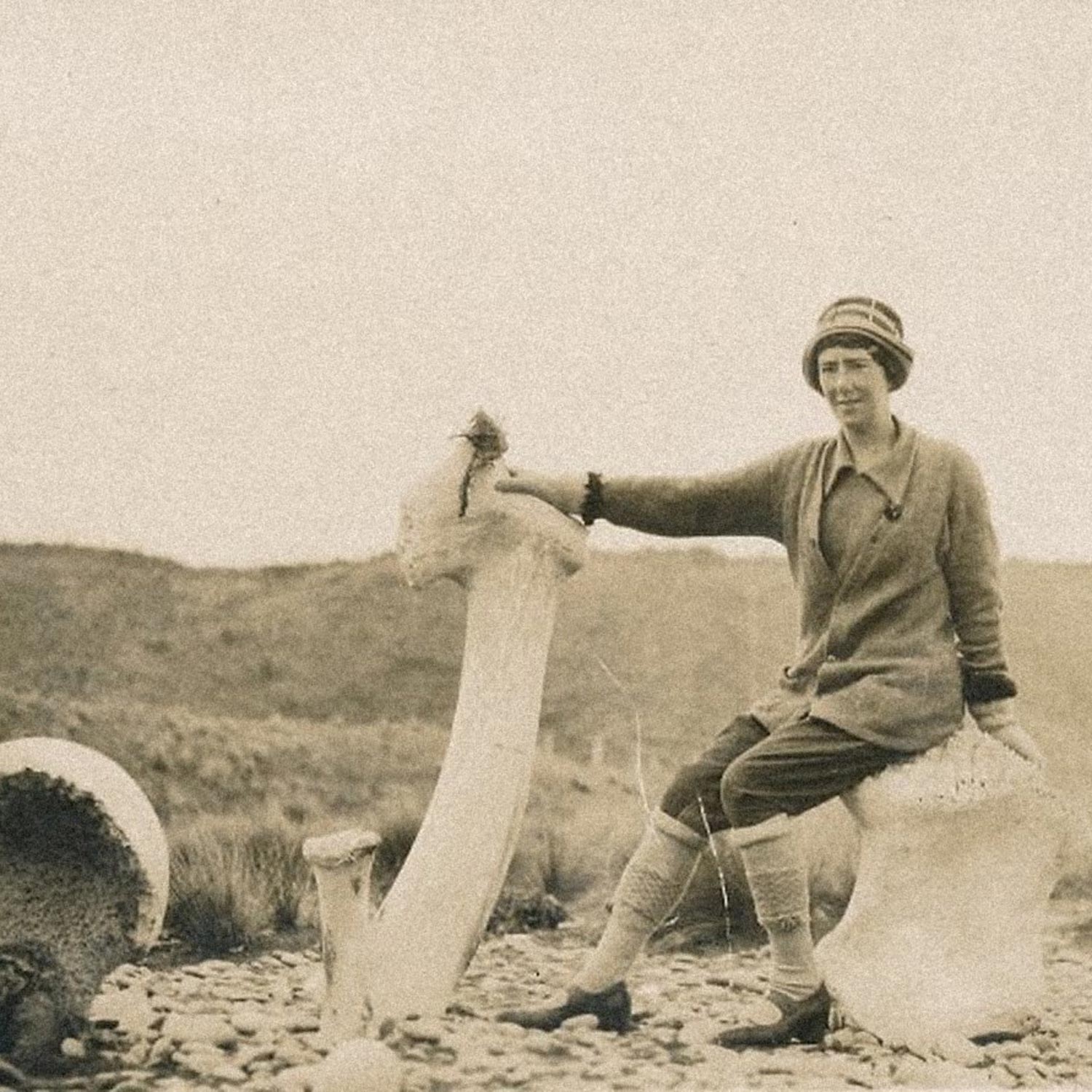
Sepia photograph of Daisy Mackie sitting on the shore at Whakanui beach beside large whale bones, including a tall jawbone standing upright.

If the rugged Whakanui beach could speak, it would have many stories to tell. From the days when tangata whenua traversed the shoreline between the Rangitata and Rakaia rivers, to when a local grocer was apparently robbed by German sailors, there certainly is a lot to discuss about Whakanui beach. Unfortunate whales and visiting seals have laid upon its rocky face, and interesting discoveries have been made over the years which have sometimes left locals with more questions than answers. The mystery vessel On 2 December 1895, it was reported in the Guardian that a mysterious visitor had washed ashore on Whakanui beach. It was not a man, nor a sea-beast, it was something else entirely… an empty fishing boat! The boat had apparently made landfall the previous Friday, 29 November, its origin unknown. It was a flat-bottomed fisherman’s boat, also known as a coble, which was found stranded by two brothers who were out for a stroll. The brothers, named A. and W. Jamieson, harnessed the help of some employees of a Mr. Isaac Thompson, who harnessed the fifteen-foot long vessel to a horse and had it hauled into a gully for safety. Just over two weeks later, on 18 December, there was another report in the Guardian which read as follows: “Some time ago a boat was found on the Wakanui beach and pulled ashore above high water mark. We learn from the police that an officer of the Customs Department was in town yesterday, and made enquiries, the result of which will be probably that within a month the boat will be sold ‘for the benefit of whom it may concern.’” No further mention of the mystery coble seems to have been made in the newspaper, and so we may never know the identity of the runaway boat’s absent owner… Message in a bottle The matter of a poorly-executed hoax, in the form of a message in a bottle, was the subject of a column in the Guardian which was published on 14 February 1891: “Some witling or other a few days ago put a scrap of newspaper in a bottle and left it on the Wakanui beach. On the paper he had written – ‘The ship Kakanui, Captain Best, lost in a gale on the Auckland Islands. This is to let any one know where we are, 3 saved.’ But the clever writer made the mistake of leaving just enough of the print of the Ashburton Guardian, on the margin of which he wrote to enable us to trace the issue, which is that of the 7th February, and the vessel was missing before that date. We circulate pretty widely, but scarcely so widely as all that.” The war comes to Whakanui An event which would soon become a widely-known Mid Canterbury legend was the alleged robbery of Mr. L. C. Turner’s grocery van by German sailors, which occurred on 2 October 1939. The Second World War had been raging for only a month when Turner, who was driving his grocery delivery van near Whakanui beach, was held up and robbed by a group of mystery men who were dressed like sailors. At least one of the men was armed with a revolver. They spoke “with a strong foreign accent”, and in “very broken English” according to claims Turner made to the Guardian. Turner was held at gunpoint while the group of four men took food items from the back of the van before vanishing. As soon as the men left, Turner rushed for the nearest telephone and called the police. Despite their best efforts, the police did not catch the culprits and, apart from a few scattered footprints, found no further evidence of the incident. The next day, Ashburton was gripped by somewhat of a scare, as the story broke in the newspaper under several dramatic headings which read: “Food Stolen Several Mysterious Features Four Men Near The Beach One Man Believed Armed Suggested Work of Foreigners” Several aeroplanes were dispatched to search the coast after the incident, and the Home Guard were employed to search on the ground. However, nothing was found. The incident remains a mystery to this day, but Turner swore to his description of the incident for the rest of his days. At least two theories have been proposed, the first and most popular is that the men were from a German submarine. The second theory, according to an article from 1983 by the late Ray McCausland, is that the robbers were sailors from a ship called the Nuremberg. Like the case of the mystery fishing boat however, we may never know the truth. From the Museum Collection Just down the coast from Whakanui beach, on the other side of the Hakatere/Ashburton River mouth, this whale vertebrae was removed from a beached whale on Ashton Beach by Charles Jaine in the 1920s. An 8-horse team was used to remove other parts from the whale. The vertebrae was used as a foot-step at the door of the Jaine family’s woolshed. It was donated to the Ashburton Museum & Historical Society in 2016. If you find a live stranded whale or other marine mammal, you should contact DOC immediately on 0800 362 468. Unless otherwise stated, photographs and research materials on this page are owned by the Ashburton Museum & Historical Society Inc. This post was modified for this blog and was originally published in the Ashburton Guardian, 27 January 2024.

Continue Reading

Great Storm of 1868: Refuge in “Arms” of Ashburton

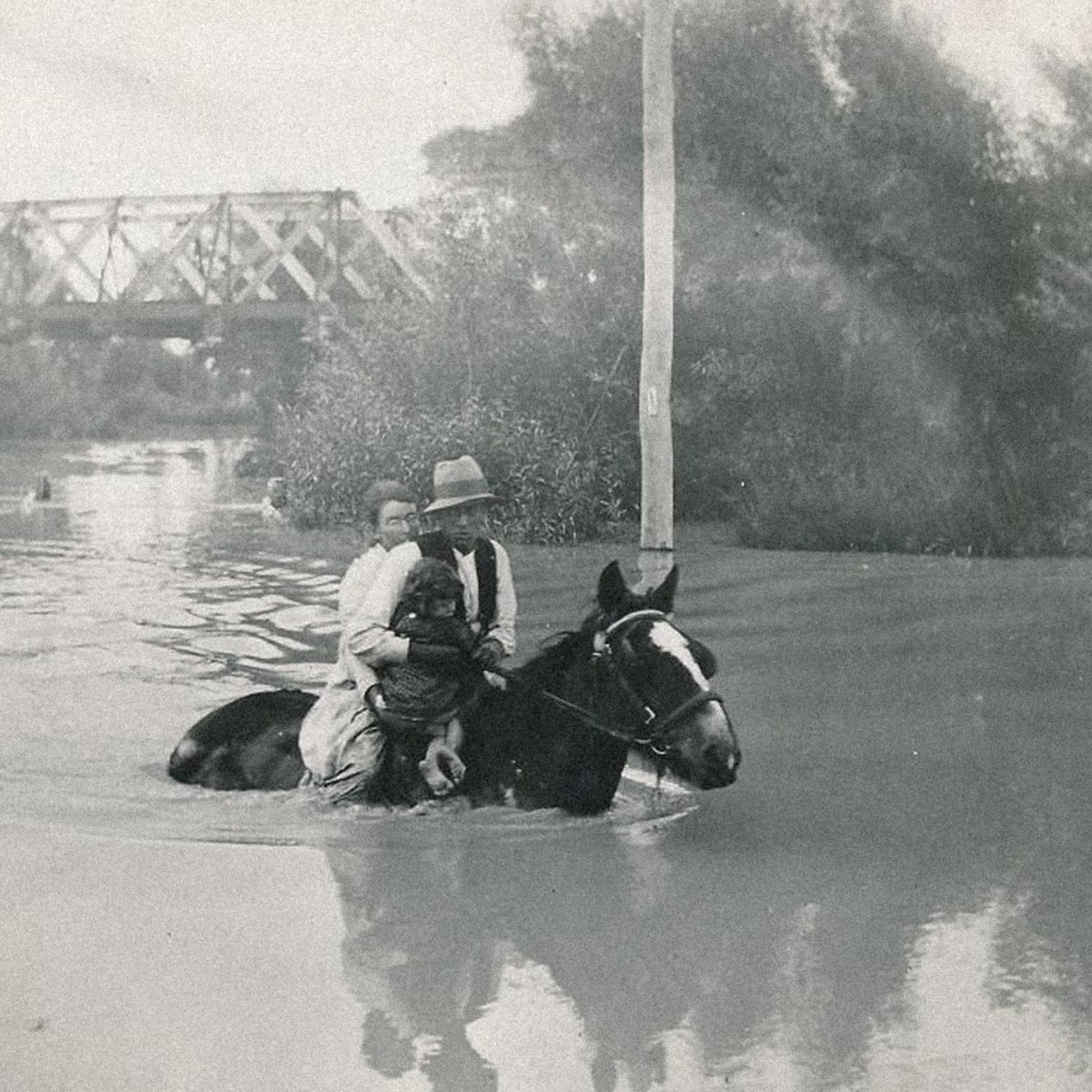
Sepia photograph of a family on horseback wading through deep floodwater, with a bridge in the background.

Two years ago our District experienced the worst flooding in living memory, closely rivalled only by the April 1951 Canterbury flood event. Severe floods have occurred with moderate frequency in the past, including the February 1936 flood event, but these were not quite on this level in terms of sheer flow. On 28 May 2021, MetService issued a red alert for Canterbury, having forecasted 200-300mm of rain in the high country. Two days later, a state of emergency was declared due to the sheer volume and duration of rainfall across Canterbury. 19 river flow recorders owned by Environment Canterbury were destroyed or damaged as the rivers reached record levels. ECan reported that their rain gauge in Mt Somers had recorded its highest 48-hour rainfall ever, at 526mm. According to the Ashburton District Council, the damage to our local roads cost $4 million to repair over six months and uninsurable damage to properties totalled $14 million. Numerous farms and buildings were wrecked, roads were washed out and bridges were battered, including the bridge between Ashburton and Tinwald on State Highway 1. The closure of our town bridge made national headlines and the South Island was essentially cut in half for days. I am sure most local readers will remember the headache that caused! It is expected that climate change will increase the intensity and frequency of extreme weather events like the 2021 Canterbury floods. However, extreme flooding typically occurs anyway once every two hundred years, give or take, which seems almost correct when you examine the Great Storm of February 1868 and the floods that resulted from it. From 4 to 6 February 1868, an ex-tropical cyclone bore down on New Zealand, which resulted in extreme weather conditions and flooding across the entire country. As many as 40 people died during the event and there were 12 shipwrecks reported. Almost the entire east coast of the South Island was flooded. On 10 February 1868, a Lyttelton Times correspondent wrote about their experiences travelling through our district at the time of the infamous storm, under the title “A new chum’s experience of a day and night of the weather and rivers of New Zealand.” Rising river or sinking coach? Our anonymous writer’s account begins in Timaru on Monday, 4 February 1868. That morning, they recall being “tired with the gaieties of Timaru” where they had been “forced to vegetate for four days.” They promptly decided to move on and secured a place on a Cobb & Co. coach headed for Christchurch, aboard which they chose the box seat (next to the driver, raised in front.) The writer soon regrets this decision, as it began raining that morning and did not show any sign of stopping. “After leaving the first station, I was informed by a fellow passenger that we were then on the runs, and that we should not leave them again till we reached Christchurch. What he meant by runs, I was then at a loss to explain, unless it was a continual run of water down my neck for the remainder of the journey.” Before crossing the Rangitata our writer switched places with the aforementioned passenger to sit further back within the coach, but they still found themselves experiencing “by no means an agreeable shower-bath.” While crossing the Rangitata River, the coachman quietly observed that he thought the river was rising, but the writer naively thought the coach was sinking while it plowed through the river. “After this came a long, miserable, dreary wet ride for 18 miles” until the party reached the Hakatere/Ashburton River. “Here, as I thought, my sorrows for the time were over, but alas! In attempting to cross with the pioneers, the coach actually stuck, and began settling so fast that at last the water was up to our waists. We were told we must jump for it, and that quickly, into about six feet of water, with the pleasing reminder that if we jumped a yard wrong, we should feel the full force of a New Zealand current. “Thankfully, all aboard made the jump safely “with only a thorough wetting.” After negotiating another channel on horseback and running through the remainder of the river, they made it to William Turton’s Ashburton Arms accommodation house intact. However, after rummaging through their luggage for a change of clothes, our writer found to their horror that all their belongings were soaked. The coachman drove off without waiting for them, and they were left behind at the accommodation house. “After borrowing a change from the obliging landlord, and getting a good dinner, things assured a much brighter aspect; still the wind kept howling frightfully, and the river was rising, though no thought of real danger occurred to anyone.” Refuge in the Arms of Ashburton The writer went to bed at 10 o’clock that night, expecting a restful night’s sleep, but two hours later they were told to get up immediately as “the river was still rising fast and was, in fact, at full flood.” They go on to describe the following events: “The water was within a few inches of the door. At this time a faint cry was heard, and some men returned, having to wade some distance up to their shoulders, with a woman and a baby, and it was known that the house was flooded, and would probably be carried away immediately. Still the water kept rising, rising, fast; and, after measuring, we found it within an inch of rushing in the house; in fact, it had commenced to flow under one of the doors.” “The agony of the poor people coming in at this time was indescribable; most of them had seen pigs, crops, poultry, sheep, and, in some instances, horses washed away, and their houses nearly floating before they quitted them. Through what can be called only the mercy of God the wind changed, and, as it was ascertained the following morning, the river had broken into a creek, which seemed to carry away a deal of the water.” In closing their correspondence with the Lyttelton Times, our dear writer says “Had it not been for this intervention of Divine Providence I should probably not be alive to write this, my first, and I can assure you I fervently hope my last, experience of the freaks and vagaries of the New Zealand rivers.” Overall, the Great Storm of 1868 and the resulting floods caused between £500,000 and £1 million in damage across the country (roughly $20-50 million today, adjusted for inflation.) Unless otherwise stated, photographs and research materials on this page are owned by the Ashburton Museum & Historical Society Inc. This post was modified for this blog and was originally published in the Ashburton Guardian, 4 June 2022.

Continue Reading

Early Urban Ashburton

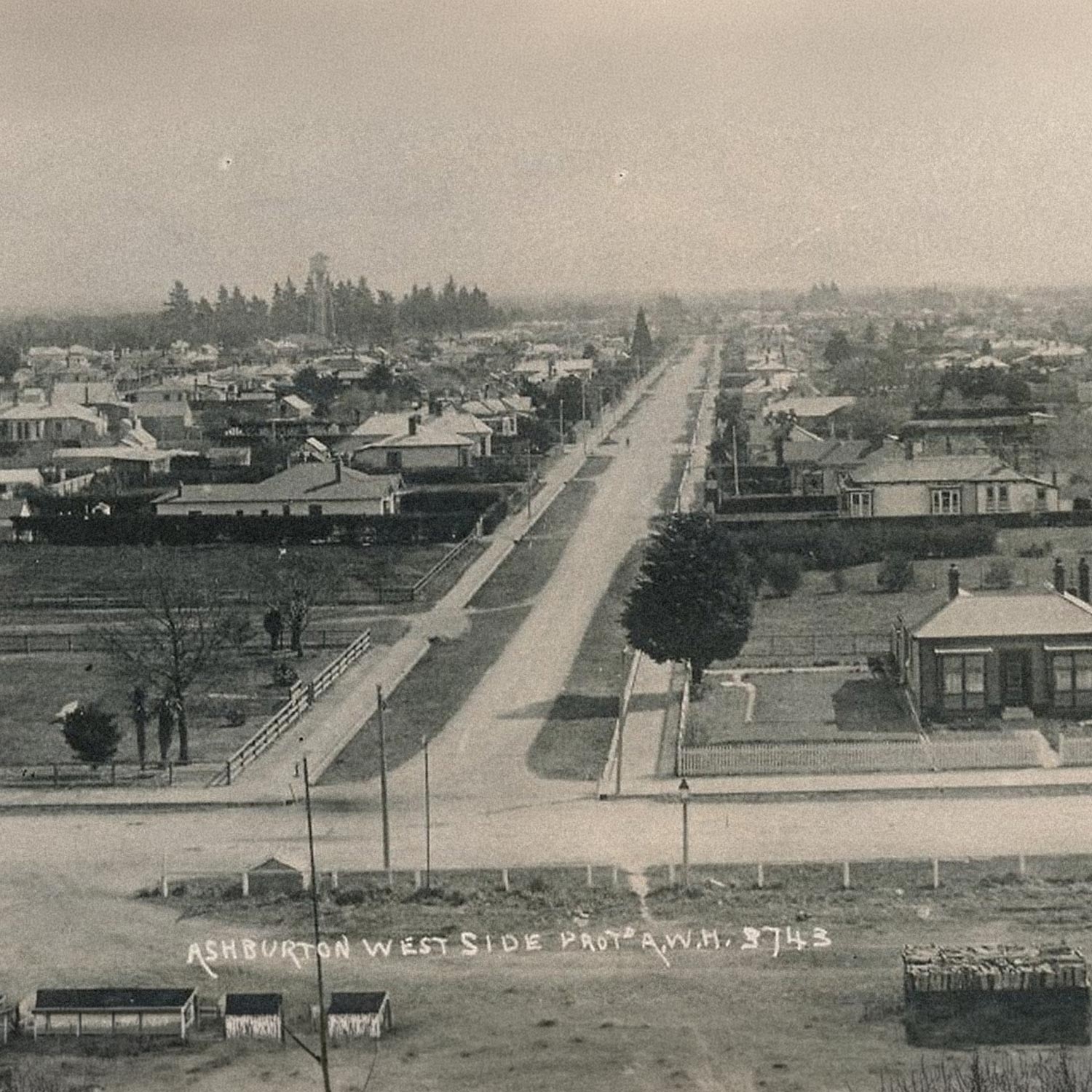
Early postcard view over Ashburton looking along Cameron Street, a wide road lined with houses and trees.

Ashburton as we know it has been constantly evolving ever since the construction of William Turton’s first accommodation house along the Hakatere Ashburton River in 1858. Rural has become urban, paddocks have become suburbs and buildings have been built, moved, modified and demolished. Ashburton was first surveyed by Robert Park in 1863 and from there our town began to grow. Generally speaking, urban Ashburton spread from the vicinity of Mona Square, northwards along East Street, and outwards along the side streets. Shops, offices, grain stores, agents and auctioneers quickly populated our fledgling central business district faster than you could say ‘Ashburton Borough Council’. Before we were even considered a borough, considerable growth had occurred. In 1903, a volume of the Cyclopedia of New Zealand covering the Canterbury Provincial District was published, which included an extensive section about Ashburton. Let’s take a look at how Ashburton was faring as a burgeoning town just after the turn of the century and see if we can draw any parallels between our past and our present. Before we dive into the cyclopedia however, let’s consider the importance of this land before Pākehā settlement and its significance for takata whenua. Our shared past Before towns and suburbs, this little slice of Aotearoa was more than capable of supporting growth and livelihood. Māori were the first to know the land that later came to be known as Ashburton District. This area contained a wide range of natural resources that were sustainably managed and collected, including seasonal foods and stone materials. Travel routes through the region were deliberately punctuated by stopping points which were in the vicinity of such resources, as well as water and shelter. Prosperity for takata whenua in this area and across Te Waipounamu (the South Island) relied on the important matauraka (knowledge) of mahika kai, the concept of valuing the natural resources that sustain life. Early urban landscape Ashburton in 1903 was described as having “the appearance of a healthy, prosperous, inland town, and that it is the centre of a rich agricultural district can be seen by glance at the large grain stores situated in the neighbourhood of the railway. The public buildings, and many of the business premises, are handsome and imposing, and the wide and well-formed streets, on market day especially, present a very busy aspect.” “The town is well built, and the streets and houses lighted with gas. With an ample supply of water always flowing in the side channels, the sanitary arrangements are excellent, and Ashburton is one of the healthiest places in New Zealand. The local industries comprise a woollen factory, flour mills, a brewery, and the Fairfield freezing works.” As for Ashburton’s population at the time, the cyclopedia states that “the recorded population of the borough, within the statutory boundaries, 2,322, does not represent the actual number of residents in the business centre of the district; if the immediate suburbs of Hampstead and Allenton were included, it would amount to at least 5,000.” Unless otherwise stated, photographs and research materials on this page are owned by the Ashburton Museum & Historical Society Inc. This post was modified for this blog and was originally published in the Ashburton Guardian, 12 March 2022.

Continue Reading