A Treasured Little Trophy
The Ashburton County Rugby Union’s annual seven-a-side tournament, held at the Ashburton Domain on Thursday, 19 August 1920, was witnessed by a record crowd who also enjoyed the favourable weather on offer.
The Ashburton Guardian had reported high hopes for the standard of play at the tournament, with eight senior teams and twelve junior combination teams planned to compete on the day.

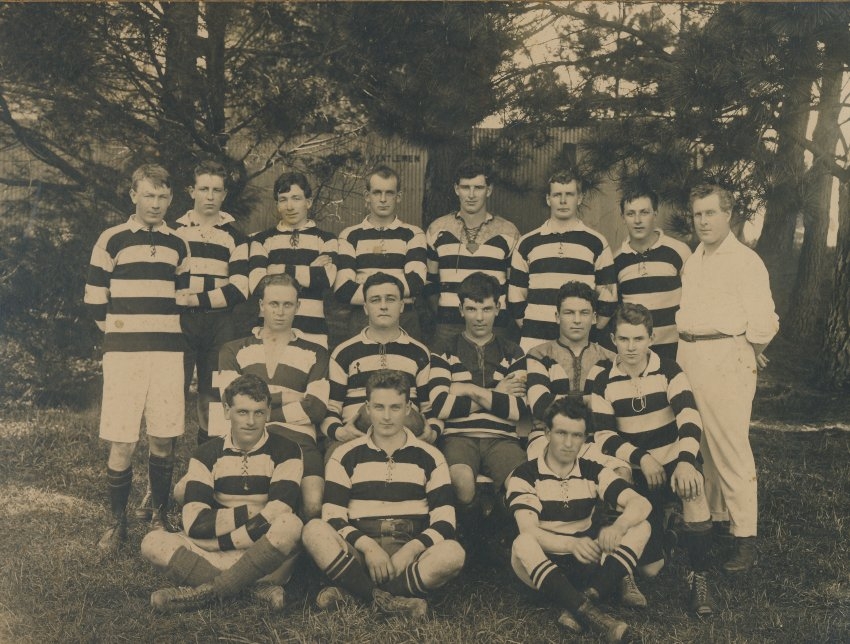
Aggressive play was expected, with defence turning into attack with lightning rapidity at the first opportunity. Machine-like, rearguard tactics were essential for success.
Less than stellar play
The tournament itself proved a disappointment for the Guardian reporter present, who was a tad disparaged at the standard of football played, contending that the style simply aped “club” football, rather than using the tactics often played in successful seven-a-side matches.
The reporter was critical of several aspects of play, including diagonal sprinting across the field, and the teams allegedly putting too much faith in their forwards to the detriment of the backs, who did not have many opportunities to utilise the ball.
Erratic and ill-timed transfers were considered the seat of the trouble as “time and again tries were thrown away owing to faulty handling at a critical moment.”
The ‘Old Boys Senior Team’ were the champions of the first division, defeating the rival ‘Ashburton A’ team 1-0. The winning team members were each presented with a miniature trophy, an example of which is pictured above.
The individually named golden rugby balls couldbe used as a match striker, with a convenient attachment allowing them to be clipped/hung to one’s watch chain.
The smoke meeting
The mini trophies were likely presented to players at a “Smoke Meeting” which took place at the Orange Hall the following year in 1921. The special reunion involved entertainment, a celebration of the year’s events, and the opportunity for guests to smoke.
To our modern sensibilities, the idea of encouraging smoking at any event, and offering a gadget to enable ease of access to the habit seems irresponsible? However, between 1920 and 1962, tobacco consumption peaked in Aotearoa New Zealand. Along with the expansion of the tobacco industry, smoking was considered a healthy habit which became increasingly popular and was deemed an integral part of 20th century life.

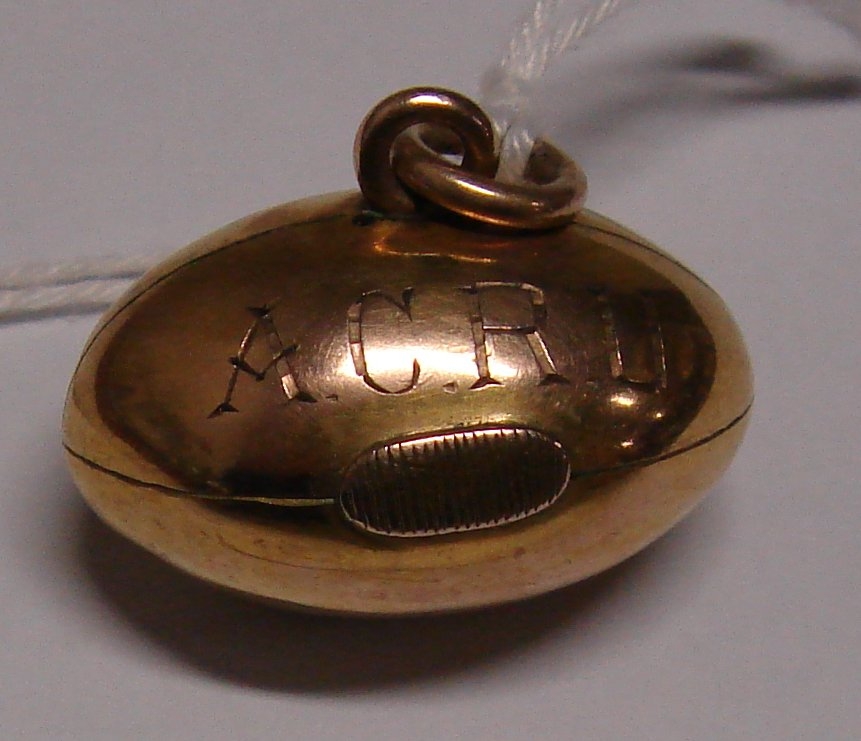
Even with this in mind, the members of the Old Boys Rugby Team were unlikely to wear their match strikers. Following the First World War, wrist watches had replaced the iconic pocket watch, due to their practicality and ease of use.
Therefore, it is far more likely that the unique trophy became a treasured memento for each player who conquered the ‘Ashburton A’ team in that decisive, but unimpressive match in August 1920.
Unless otherwise stated, photographs and research materials on this page are owned by the Ashburton Museum & Historical Society Inc. This post was modified for this blog and was originally published in the Ashburton Guardian, 27 March 2026.