Say Yes to the Dress: 100 Years of Mid-Canterbury Weddings
Among the many artefacts collected and protected by museums, we find love in all forms, from letters and poems between loved ones sent during war, to gifts, dairies, and valentine cards. Love can also be found in a certain kind of garment: the wedding dress. By being worn during a wedding, a piece of clothing is transformed into a unique statement of love, devotion, and commitment.
Weddings are a way to capture love and celebrate the moment with friends and family and are often described as the most important day for both the bride and groom. The wedding dress becomes a memento of a bride’s special day, leaving happy memories stained onto the fabric forever.
Popularised by Queen Victoria in 1840, wearing a white wedding dress became a lasting trend in the Western world. Different styles have surfaced over the years, from formal gowns and corsets to more diverse silhouettes seen in modern times.
A selection of dresses, which were worn at various times from 1882 to 1992, were picked out and put on display for Dearly Beloved: 100 Years of the Wedding Dress, which ran from 14 December 2025 to 8 March 2026. The display allowed each dress to convey its own unique story, also shedding light on the story of each bride’s special day.
Dark and demure
The oldest gown that graced the display was a wedding dress worn by 22-year-old Catherine Julia Cullen from Akaroa, who married Hugh Cullen in the newly rebuilt Church of the Holy Name of Jesus in Whakatere Ashburton, on 11 December 1882.
At the time, coloured dresses were on trend when getting married, as one tended to wear their best attire on their wedding day. A special accessory was usually worn, such as a veil, floral headpiece, or bouquet.
Catherine wore a silk blue-grey gown, with cloth-covered buttons, and an asymmetrical princess line skirt, with a high neck and bustle effect at the back, plus a separate train with a pleated edge.
A modest choice
The second dress in the display was worn by Emilie Bertha Diehl, daughter of hotel owners Ernst and Ellen Diehl. Emilie was to marry Arthur Wilson, son of F. Wilson of Tunbridge Wells, on 6 November 1912. They married at Herbert but ended up staying in Ashburton, where they were eventually buried.
Wedding gowns from this period commonly had high necklines and long sleeves with lace and silk detailing alongside delicate embroidery. Wedding dresses during this time were usually cream or ivory toned, as bleaching the fabric white caused too much damage to the structure of the thread.
Emilie’s dress was made from the same type of cloth used for nuns’ veils; the lace insert was designed for modesty. Her dress was of cream coloured fabric with full-length long sleeves. Cloth-covered buttons, floral lace insert and a high collar are present, and lace was used in the lower section of the sleeves. There is satin furbelow trim along the V-shaped bodice, and knotted fringed decoration at the back.
A roaring twenties wedding
This wedding dress was worn by a schoolteacher, Edna Margaret Percy, daughter of Mr. H. C. Percy, a tobacconist based in Ashburton. Edna married Staff Sergeant John McGregor (Jack) McRae, a veteran of the First World War, also an accountant employed by Walter Pickles & Co., Ashburton. The pair married at St. Stephen’s Anglican Church, Ashburton on 14 April 1926.
During the 1920s, fashion was influenced by the post-war “roaring twenties”. New movements in music and fashion emerged, reflecting glamour and freedom. As a result, two new bridal styles emerged. An informal style embraced shorter hemlines, while more formal designs included narrow, floor-length dresses with narrow trains, scrapping the corset and earlier dress forms. Brides during this era favoured drop-waist gowns with loose silhouettes, sophisticated beadwork and lace details.
Edna’s wedding dress was a silk georgette, with a silk-lined drop waist and long sleeves. The front and back have fine glass beadwork peony designs and beaded tassels. Fabric godets adorn below the hip line on both the front and back, with a sewn in petticoat.
Pretty in pink
Another schoolteacher by the name of Eliza Knox, daughter of Irish settler Samuel Knox, married William (Bill) Giddings, an Ealing farmer. The couple were raised in Mid Canterbury and were married in July 1931.
Eliza was seen as an older bride, marrying at age 41, which might be a reason that she rejected the traditional white gown. During this time the Great Depression was still in full swing, causing people to wear their best Sunday outfit rather than a traditional wedding gown. Pale colours like pink and blue were quite popular as well.
1920s styles still had influence during the 1930s, including close-fitting cloche hats, art deco detailing, and straight tailoring.
Eliza’s wedding dress is a blush pink, velvet lined, ankle length dress with long sleeves. It has a combination of accessories including a pink felt velveteen ribbon cloche hat, silk stockings and matching shoes.
A glamorous golden gown
This elegant satin dress was worn by Honor Mary Dilon Sawle when she married William Kenneth George (Ken) Lill at Baring Square Methodist Church, Ashburton on 3 May 1939. Their marriage was much celebrated by Ashburton’s Methodist community, and before they were married, they received gifts from the church choir and combined bible classes. The couple were farmers at Loburn but soon moved to Christchurch.
The dress reflects 1930s Hollywood glamour. The long, languid lines of the satin gown and holden hue were chosen to complement Honor’s chestnut hair. It was styled after Duchess of Windsor Wallis Simpson’s well-known 1937 wedding dress. Similarities can be seen especially around the fitted waist, high neckline and full-length skirt.
Honor’s satin buttercream dress has long, full-length sleeves, a wide-fitting satin waistband insert, and an inserted train at the back with furbelowed hem. The gown also features a Peter Pan collar with fagoting work, also on bodice insert. It was originally worn with a Honiton lace veil.
A pretty parachute
One of two personal favourites of mine, this beautiful 1946 silk wedding dress was made by Nola Claire Miles (known as Claire) and her mother Ellen. The fabric used was taken from a Second World War parachute, demonstrating resourcefulness when the two women didn’t have enough ration coupons to by actual silk.
The design of the dress reflects fabric rationing during 1940s. The number of pleats, seams and buttonholes were regulated, as was the width of sleeves, hems and collars. Brides either wore repurposed dresses or made their own with these restrictions in mind.
Claire served in the Women’s Auxiliary Air Force; her husband Robert Neil McLeod was a flight rigger in the Royal New Zealand Air Force. The two met on a double date after they both served and were engaged eight days later.
The dress is made of undyed parachute silk, is of full length with a long train, capped sleeves, and furbelowed ribbon along the hem of the dress, neckline and sleeves. The dress also has a sewn-in sash made from the same parachute silk, secured at the back.
Medieval majesty
This medieval-style gown was created for Marjorie Murdoch, for her marriage to Brewer Scott in 1959. The maker was Vera Hepburn, a Czechoslovakian woman whose own story of romance is worth exploring. She met her husband Alan, who was from Methven, during the Second World War. Alan was in a prisoner-of-war camp, and following the war, he and Vera settled in Methven.
The making of the dress was influenced by Christian Dior’s ‘New Look’. Wedding gowns from the 1950s often featured cinched waists, tea-length skirts and luxurious fabrics such as satin, lace and tulle. The “hourglass” shape is a timeless and romantic silhouette that remains in iconic vintage bridal fashion today.
Created by Vera Hepburn, the dress was made from cream, jacquard figured satin damask, and is full-length with a train, and long sleeves. Notable details include piping around the V-shaped neckline and waist, and the pearl embellishment and beadwork on the bodice and skirt.
As seen in a magazine
This delicate daisy-braid bridal gown, which was worn by bride Helen Popplewell, was inspired by magazine fashion, a possible reference to the work of New Zealand designer Vinka Lucas. Helen brought her design inspiration to a local dressmaker, who then created this exemplar 1960s two-piece gown. Helen was a nurse at the Ashburton Hospital, and her husband-to-be, Michael Hanrahan, later the director of Ashburton Museum. They married at Our Lady Help of Christians Church, Culverden, on 17 May 1969.
Shown by this dress, A-line or empire-line dresses and simple silhouettes were staples of this era. The material was bought at MacLeod Fabrics in Christchurch, the cream colour chosen to match the “something borrowed” wedding veil, which had belonged to Michael’s mother. The dress and headdress both feature daisy motifs, an iconic symbol of decade’s shift towards modern and youthful style.
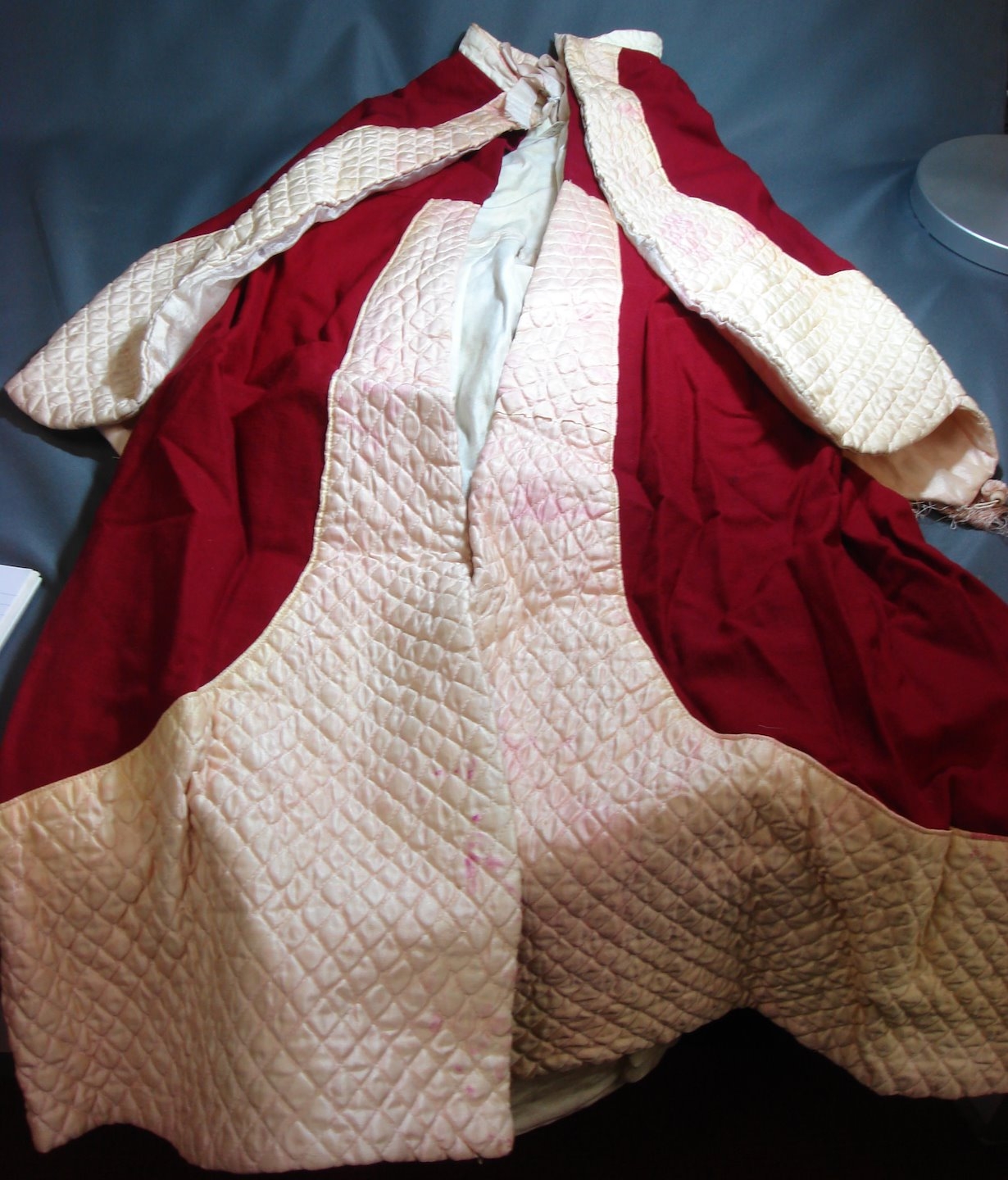
The wedding dress was created by an unknown maker in Ashburton. The cream and two-piece outfit has a scoop-neck coat with train, is edged with daisy braids, and has long sleeves. Split wide and falling wide, closed at the neck. Worn over crimplene A-line dress, full-length, sleeveless. Daisy braid edging armholes, neckline and hem.
Lovingly handmade
This dress was worn by Andrea Mary Hasley Hallson (formerly Allen), winner of the 1970 Ashburton Bride of the Year competition. Andrea worked as a legal secretary, and she met her British husband while on holiday in London. The two married at St Andrew’s Presbyterian Church on 17 January 1970.
At the time, the Ashburton Guardian described the dress as: “A gown of crepe with a coat of ribbon lace featuring bell sleeves, a hood and no veil.”
The dress was judged to be the best out of 34 brides, who paraded with attendant bridesmaids before a capacity audience in the Returned Servicemen’s Association Hall, on 22 - 23 September 1970. Demand for seats led to a repeat event on the second night.
The competition was judged by Christchurch photographer Euan Sargison, Paula Ryan, the 1969 ‘Rose of Tralee’ winner, and graphic designer and model Marlene Reay. Margret Ross placed second and Anrea Hunter third.
In the Dearly Beloved exhibition, Andrea’s husband’s navy suit and pants was also displayed alongside her dress.
A crocheted gem
This crocheted wedding gown was made for Dorothy, a typist, when she married Raymond Jack Tanner from Timaru, at St. Anne’s Church, Geraldine, in 1972.
Dorothy’s dress was entirely handmade by Valeire Guilford from Mayfield. During the 1970s, crochet was a major trend. This decade was free spirited and eclectic in style, which reflected new opportunities and social changes, especially for women as individual self-expression became more encouraged.
This original white lining was replaced with blue, so it could be used for Scottish country dancing.
The crochet dress was made from white yarn, is full length with three-quarter length sleeves. Bodice with gathered skirt at the waistline. Crew neck with buttons at the back, and blue fabric lining.
An unknown beauty
We only have a small amount of information about this dress, other than that it came from South Canterbury. Regardless, it is a good example of 1980s bridal fashion, capturing the decade’s extravagant flair and dramatic style.
This dress captures aspects of the fairytale dream a Royal wedding, particularly that of Lady Diana Spencer, as she became Princess Diana, in 1981. The dress embodies the Victorian revival style, featuring puffed sleeves and layers upon layers of frills and lace applique, pearl and sequin detailing – all tied up in a giant bow.
Nineties shine
Elisabeth (Liz) Solway and Antony (Tony) Quaid were wed on a hot November day in Ashburton, 14 November 1992 to be precise. The two were married at St. Stephen’s Anglican Church, Ashburton.
The long satin train and embroidered panelling are exemplary of the 1990s, a time which featured opulent, fairytale designs inspired by the glamour of the decade prior. Puffed sleeves were still the trend, with this dress also having long sleeves that taper down to pointed cuffs, giving a somewhat medieval look to the gown.
This dress was made by Paula Lawrence, who owned a bridal dressmaking shop previously situated in the Allenton Shopping Centre.
A hidden train hand hold inside the back seam features a small blue bow – the bride’s “something blue”. Several other accessories relating to the wedding are held by the Museum, including a special horseshoe bearing a felt sheep, which apart from being traditional is also a nod to the pair’s involvement with the Black and Grey Sheep Breeders Association.
By Puhitai Raroa-Devery
Unless otherwise stated, photographs and research materials on this page are owned by the Ashburton Museum & Historical Society Inc.
Continue Reading