While the notion of gender pay equity was largely non-existent in 1911, there was considerable debate regarding the plight of rural wives, and the scarcity of female domestic staff.
The situation was so dire that newspaper headlines carrying the title “Killing Off Farmers’ Wives” were a relatively common occurrence.
The phrase was first coined by a Mr. McQueen, a Southland delegate at the Farmers Union conference that year. During the debate, another delegate claimed that "if men worked half as hard as the women had to work, they would be killed.”
Dying young
The mention of the topic at the Farmers Union conference led to newspapers around the country raising the issue. It was noted that a significant number of wives were dying young, necessitating their farmer husband to remarry in order for his family to be cared for.
The contention that perhaps wives of the 20th century were not as ‘hale and hearty’ as their predecessors did not mitigate the fact that the current generation appeared to be being worked to death.
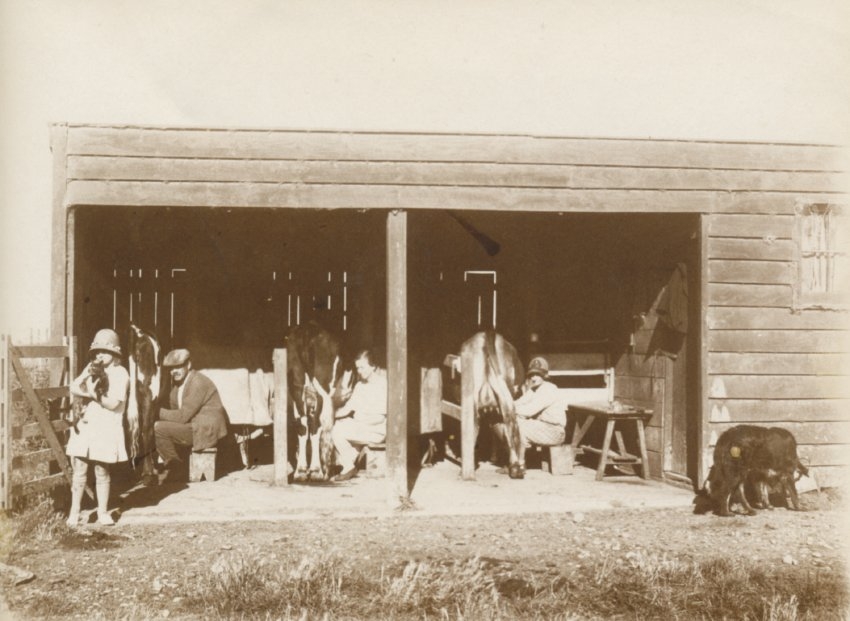
Cows owned by Walter Lylian being milked by hand, Staveley, 1915. (Photo reference: 04.2003.0108f)
In a Guardian column from September 1911, entitled ‘Killing Settlers’ Wives’, a male Ashburtonian suggested that the root of the problem lay with the disparity between the attractive working conditions in shops and factories, and those experienced by domestic staff. He contended that the only way to attract girls to domestic work was to offer more appreciation, improved wages, and greater freedom to workers, thus placing them “on a level, industrially and socially, with their sisters engaged in shop and factory life.”
While the males involved tended to focus on the solution of increasing the amount of female domestic staff prepared to work alongside their wives to mitigate their workload, some of the wives in question had another solution.
Why couldn’t they receive wages?
One wife, writing to the Guardian in October 1911, described her daily workload:
“Three children and an eight-roomed house to look after, cooking to do, and also milk buckets to wash twice a day. The garden required weeding, and water was carried the two chain distance (40 metres) from the house to the creek. There is the mending, washing and ironing all to be done by myself. What sensible man would say I ought not to get wages?”
It can be assumed that her spouse did not model such sensibility, as she goes on to say:
“Of course, most women know they can order clothes according to their position in life. But there is not a lot of pleasure in ordering good quality clothes when you get grumbled at for days, and receive black looks!”
She suggested that every woman carrying a similar workload to herself should, by law, receive 10 shillings a week for every three pounds their husband earned. Then, she contended, work would be a pleasure, providing women like her with the freedom to drive into the township or visit neighbours without the need to rely on her husband to begrudgingly take her.
Her attitude regarding her current situation was summed up as follows: “Life on a dairy farm is all work, work, with very little pleasure.”
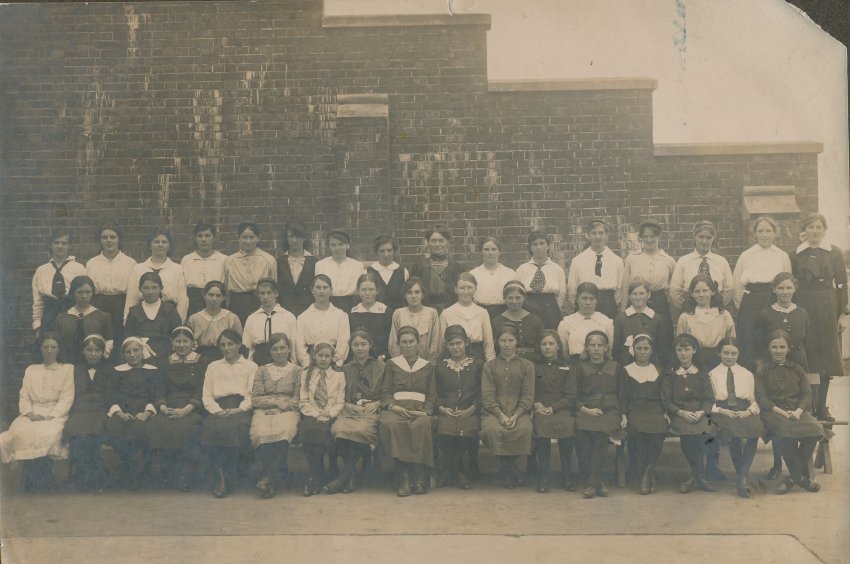
Ashburton High School girls, c. 1916. These young women could look forward to a greater choice of employment and better conditions than their forebears. (Photo reference: 04.1992.0108d)
Unless otherwise stated, photographs and research materials on this page are owned by the Ashburton Museum & Historical Society Inc. This post was modified for this blog and was originally published in the Ashburton Guardian, 6 March 2026.